Category: Agile

  • The AI4Agile Foundational Assessment: A Free Practical Judgment Benchmark for Agile Practitioners

    Using AI at Work Does Not Mean You Understand It

    Many agile practitioners use ChatGPT at work. That does not mean they understand AI well enough to trust your own judgment. The problem is not that agile practitioners ignore AI. The problem is that many already use it confidently without knowing where their judgment breaks down. The free AI4Agile Foundational Assessment measures precisely this skill gap. (Download your access file below.)

    The assessment comprises 40 scenario-based questions. . It does not ask for definitions, but puts you into situations that agile coaches, product managers, and Scrum Masters face every week: weak prompting producing generic output, misleading data analysis, questionable agent output, and, possibly, organizational pressure to treat AI output as “good enough” to go with it.

    Most people who use AI do not fail because they lack knowledge, but because they cannot distinguish between plausible outputs and trustworthy judgment. But see for yourself!
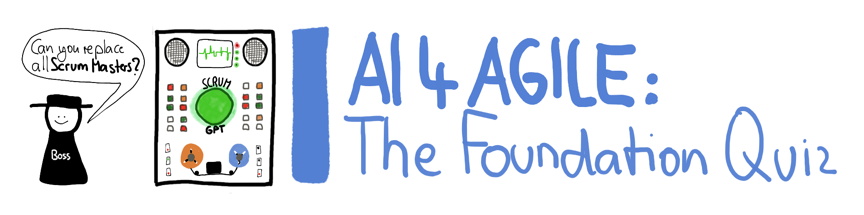
    AI4Agile Foundational Assessment: A Free Practical Judgment Benchmark for Agile Practitioners - Berlin-Product-People.com

    (more…)

  • Jira to AI Agents: From Project Management Tool to Project Knowledge Architecture

    TL;DR: Jira to AI Agents

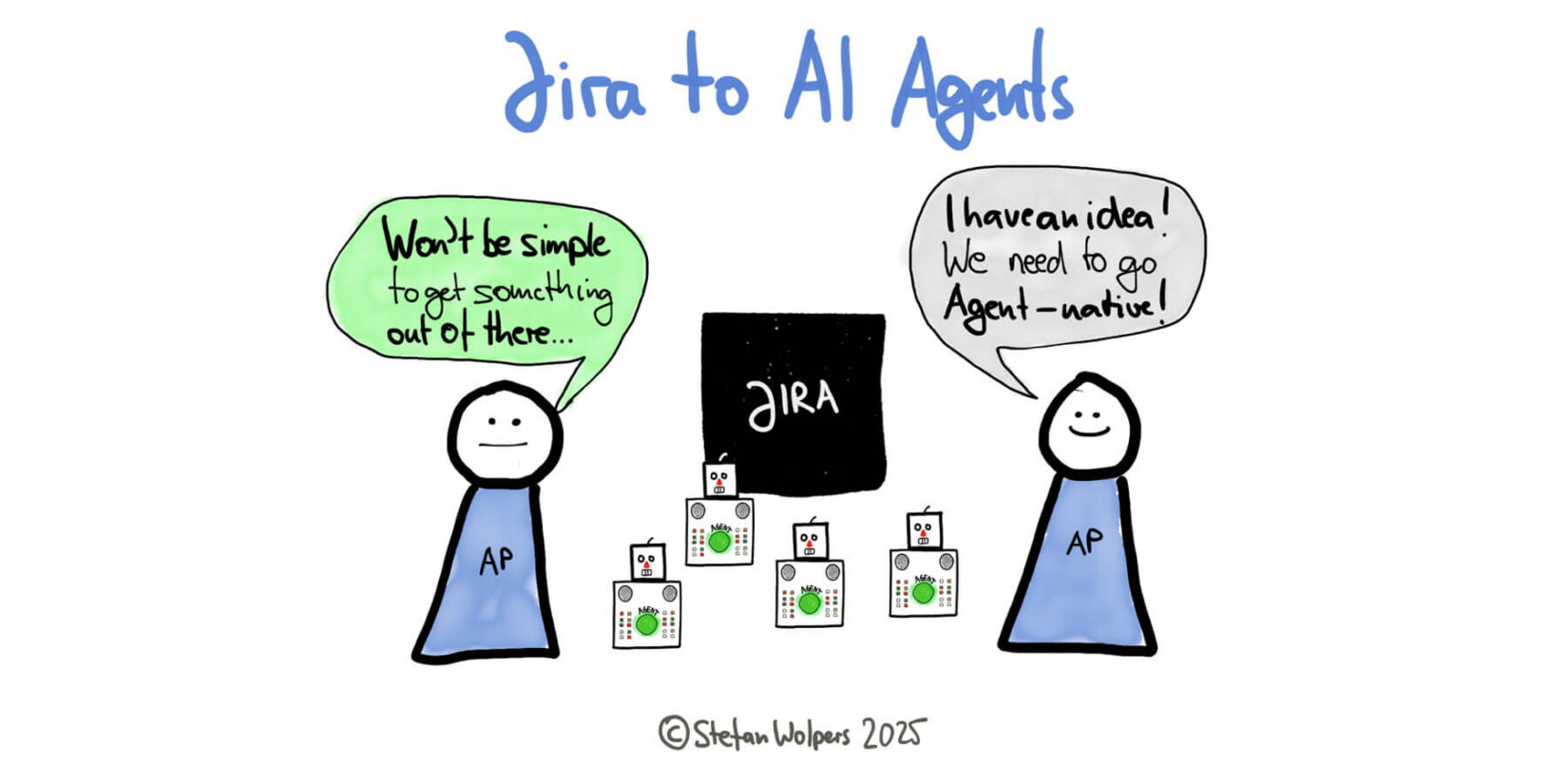
    Jira was named after Godzilla and built to track bugs. It became the default agile tool because it satisfied a deeply human desire: controlling work by putting it in boxes with statuses, assignees, and due dates. That system works for humans scanning dashboards. It does not work for autonomous agents that need to reason about patterns across iterations, detect recurring problems, and forecast what is likely to break next. This article argues that the tool on which 62% of agile teams rely is about to be demoted from knowledge authority to execution interface. We need to move from Jira to AI Agents.

    Jira to AI Agents: From Project Management Tool to Agent-Enabling Project Knowledge Architecture - Berlin-Product-People.com

    (more…)

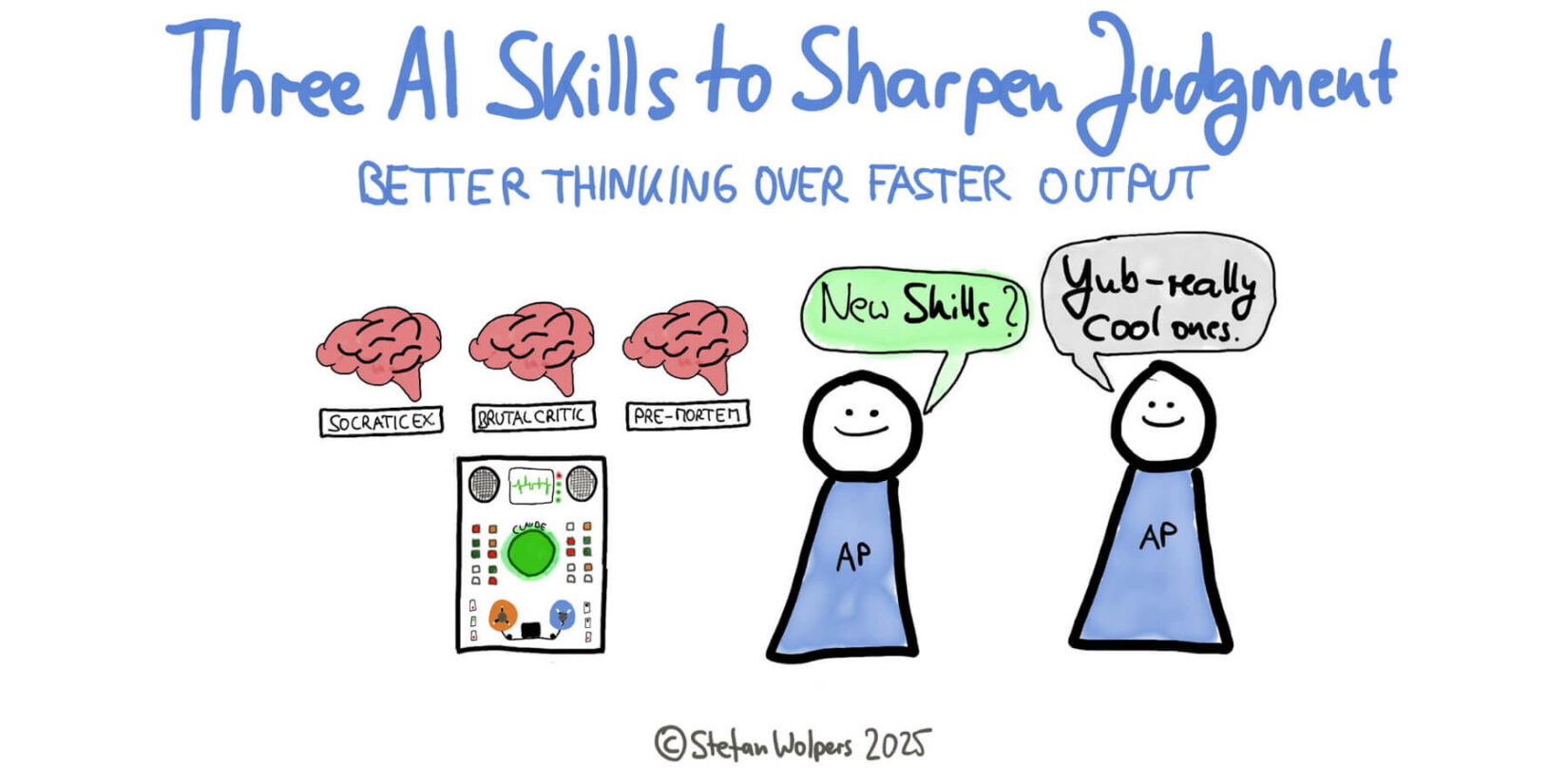
  • Three Thinking AI Skills to Sharpen Judgment

    TL; DR: Thinking Skills for Agile Practitioners

    Most agile practitioners use AI to produce outputs more quickly. Few use it to think better. This free download gives you three AI thinking skills (Socratic Explorer, Brutal Critic, Pre-Mortem) that turn Claude into a partner for diagnosing problems, stress-testing plans, and anticipating failures before they happen.

    Three Thinking AI Skills to Sharpen Judgment: Socratic Explorer, Brutal Critic, Pre-Mortem — Age-of-Product.com

    (more…)

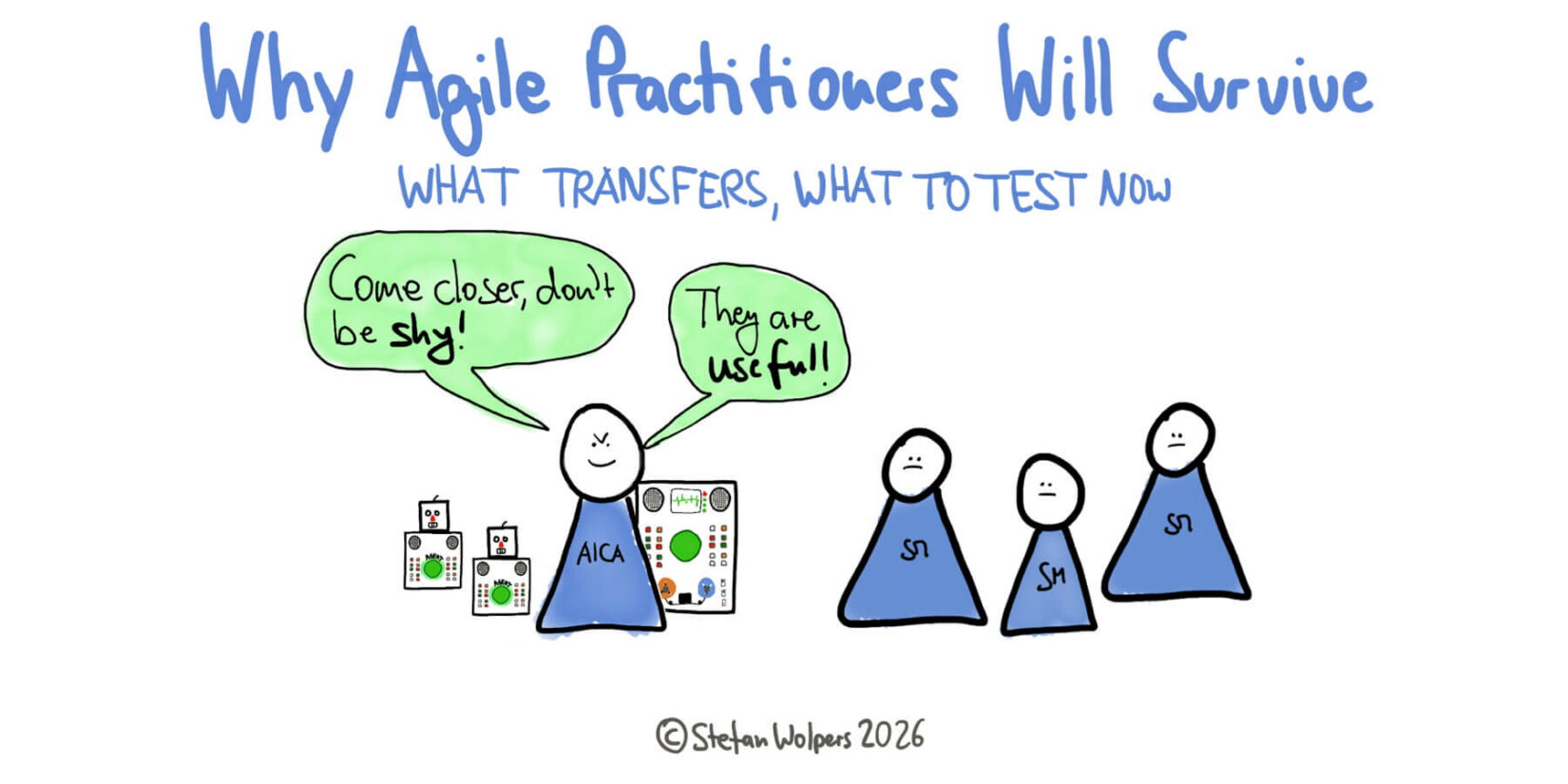
  • Why Agile Practitioners Should Be Optimistic for 2026 (Part 2): AI for Agile Practitioners

    TL; DR: What to Do About It

    Your anxiety about AI is a signal, not a verdict. Here is why AI for Agile Practitioners matters and how:

    1. What transfers: Organizational change expertise, empirical process control, and cross-functional translation. The hard parts of AI adoption are the parts you have been practicing for years.
    2. What does not: Framework expertise as a standalone value proposition, process facilitation without outcome ownership, and tool-agnosticism as a point of pride.
    3. What to do this week: Run one small experiment that integrates AI into your actual work. Before you prompt, categorize the task: Assist, Automate, or Avoid.

    What would remain of your professional value if you removed every framework name and certification from your resume? Whatever that is: Invest there.

    Why Agile Practitioners Should Be Optimistic for 2026 (Part 2): AI for Agile Practitioners - Age-of-Product.com

    (more…)

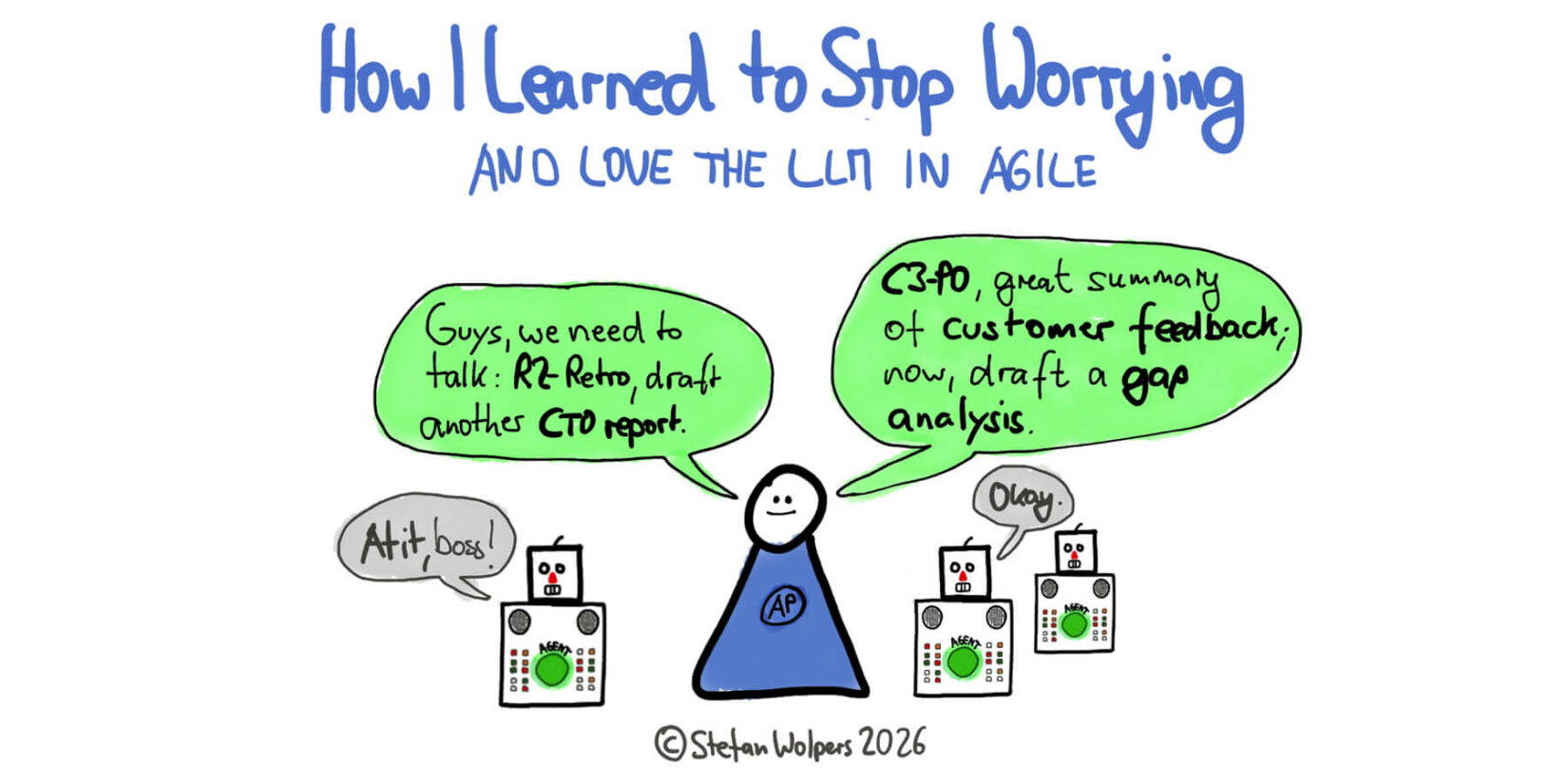
  • How I Learned to Stop Worrying and Love the LLM in Agile

    TL;DR: The LLM in Agile

    Most agile practitioners are still debating whether AI matters. I stopped debating and started using it. Over two-plus years, AI went from proofreading my book manuscript to designing Retrospectives based on team data, to running an entire product development process for a new course, to working with autonomous AI agents. Each phase revealed what the previous one could not teach. Finally, I went Kubrick and started loving the LLM in Agile.

    The window of opportunity to build this competence is open now, but it will not remain open indefinitely. Start acting.

    How I Learned to Stop Worrying and Love the LLM in Agile: A two-and-a-half year AI journey of an agile practitioner — Berlin-Product-People.com

    (more…)

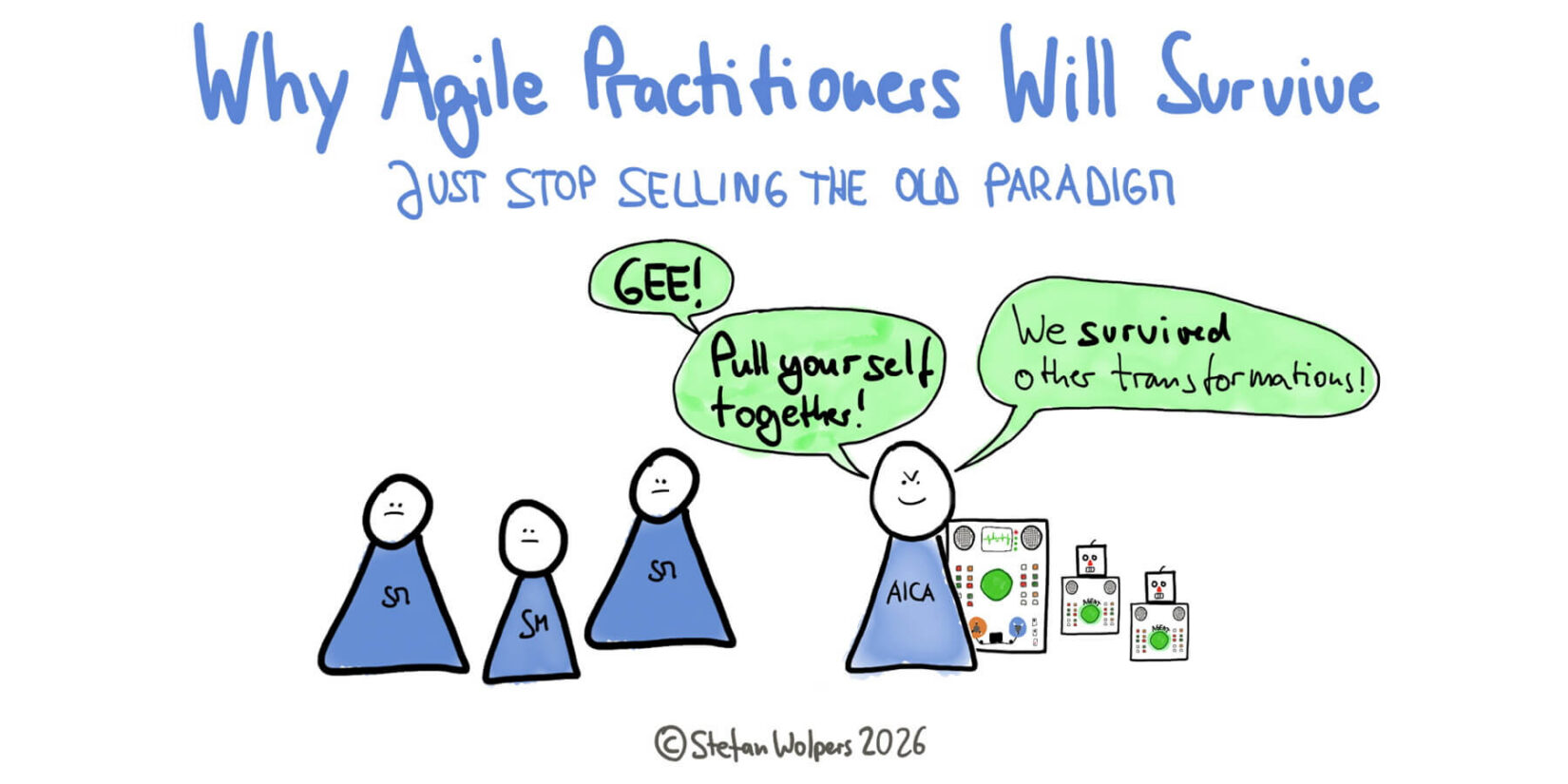
  • Why Agile Practitioners Should Be Optimistic for 2026 (Part 1): You Have Already Survived This

    TL; DR: The Survival of Agile Practitioners

    It is February 2026, and your LinkedIn feed oscillates between two narratives:

    1. Narrative #1: AI will replace agile practitioners such as Scrum Masters, Agile Coaches, and everyone whose job description includes “facilitate” or “coach.”
    2. Narrative #2: Stay calm, get another certification, and wait it out.

    Both are wrong, and for the same reason: They treat AI adoption as a technology event when it is an organizational transformation. And you have already survived one of those.

    Why Agile Practitioners Should Be Optimistic for 2026 (Part 1): You Have Already Survived Other Transformations — Berlin-Product-People.com

    (more…)

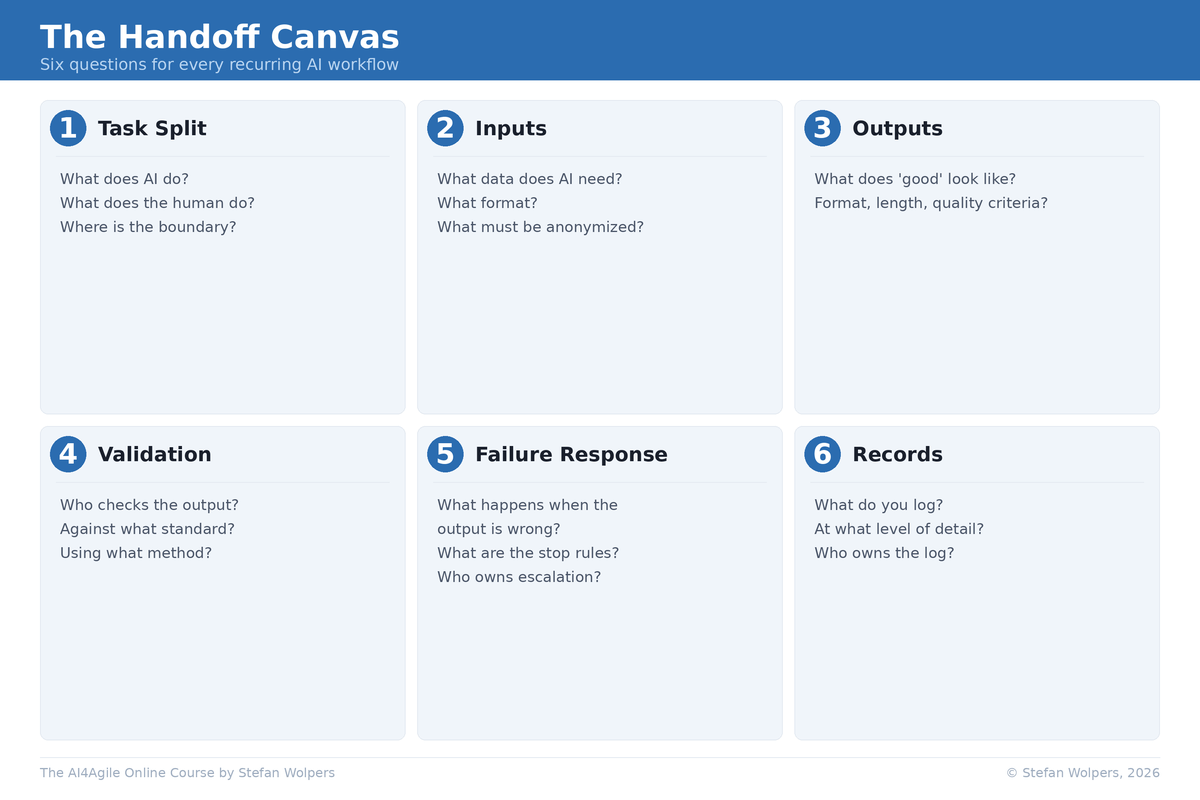
  • The A3 Handoff Canvas: Six Questions That Turn AI Delegation Into a Repeatable Workflow

    TL;DR: The A3 Handoff Canvas

    The A3 Framework helps you decide whether AI should touch a task (Assist, Automate, Avoid). The A3 Handoff Canvas covers what teams often skip: how to run the handoff without losing quality or accountability. It is a six-part workflow contract for recurring AI use: task splitting, inputs, outputs, validation, failure response, and record-keeping. If you cannot write one part down, that is where errors and excuses will enter.

    The Handoff Canvas closes a gap in a useful pattern: from an unstructured prompt to applying the A3 framework to document decisions with the A3 Handoff Canvas, to creating transferable Skills, potentially leading to building agents.

    The A3 Handoff Canvas: Six Questions That Turn AI Delegation with the A3 Framework Into a Repeatable Workflow — Berlin-Product-People.com

    (more…)

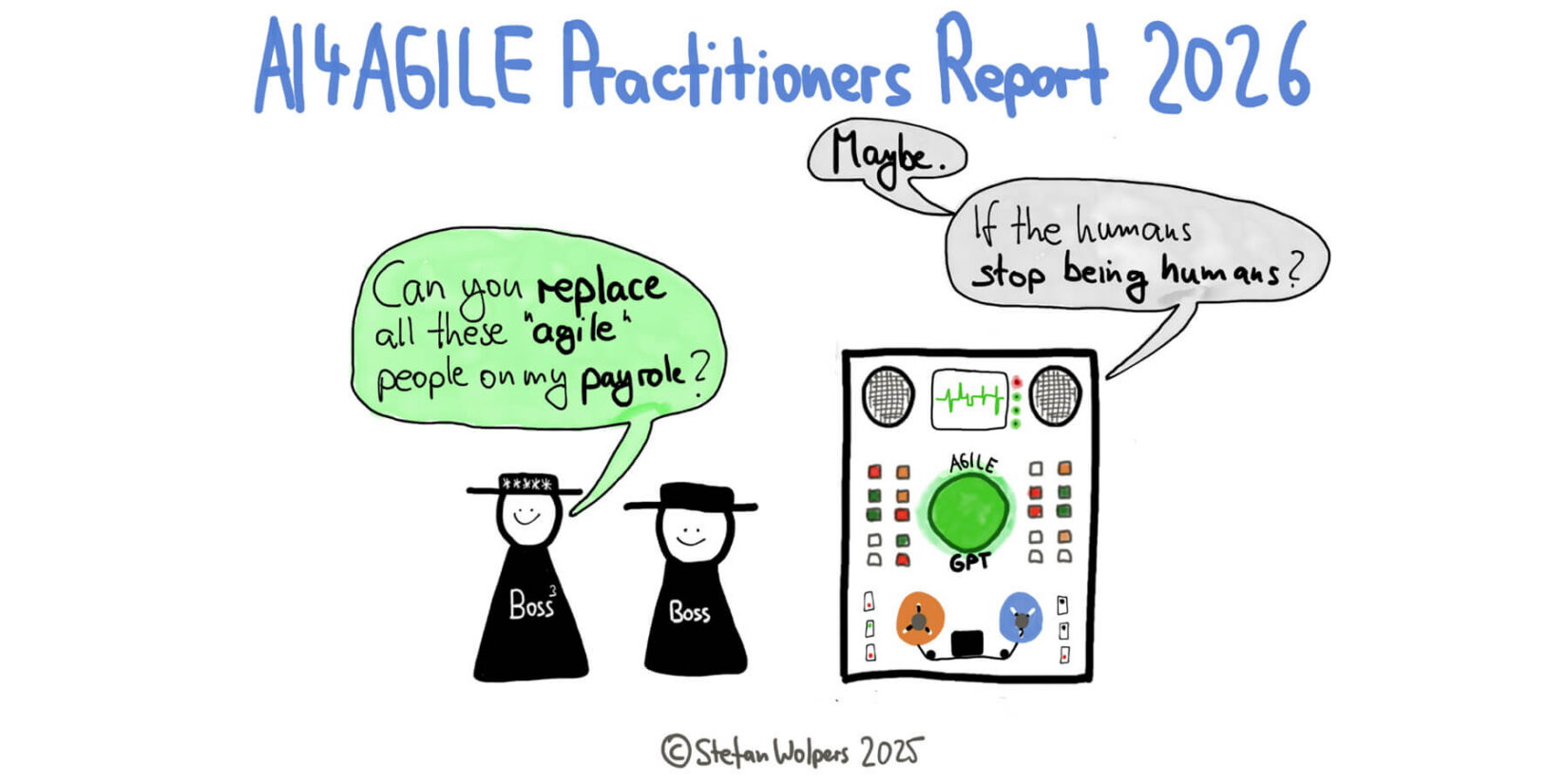
  • The AI4Agile Practitioners Report 2026 — Out Now!

    TL;DR: The AI4Agile Practitioners Report 2026

    83% of Agile practitioners use AI, but most spend 10% or less of their time with it because they do not know where it fits. Our survey of 289 Agile practitioners identifies the real adoption barriers and shows where AI creates value you can act on. Learn more by downloading the free AI4Agile Practitioners Report 2026.

    AI4Agile Practitioners Report 2026 — Learn how You Compare to Your Peers’ Application of AI — Berlin-Product-People.com

    (more…)

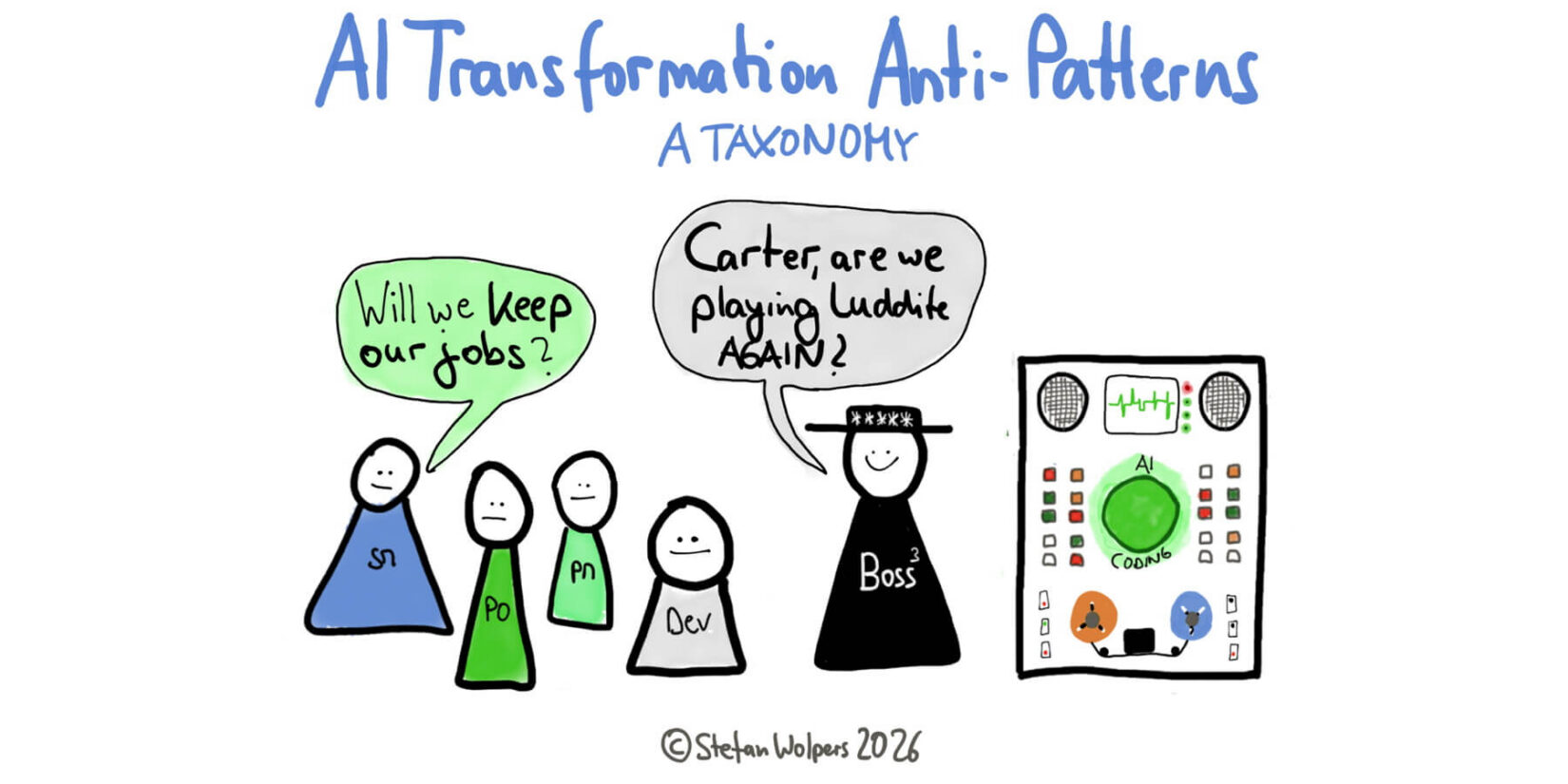
  • AI Transformation Anti-Patterns (And How to Diagnose Them)

    TL;DR: AI Transformation Anti-Patterns

    AI initiatives fail for the same reasons Agile transformations did: The majority of failures result from people, culture, and processes, not technology. This article gives you a diagnostic checklist of 10 AI transformation anti-patterns to spot where your organization’s initiatives are coming off track.

    AI Transformation Anti-Patterns And How to Diagnose Them Before They Derail Your AI Initiative — Berlin-Product-People.com

    (more…)

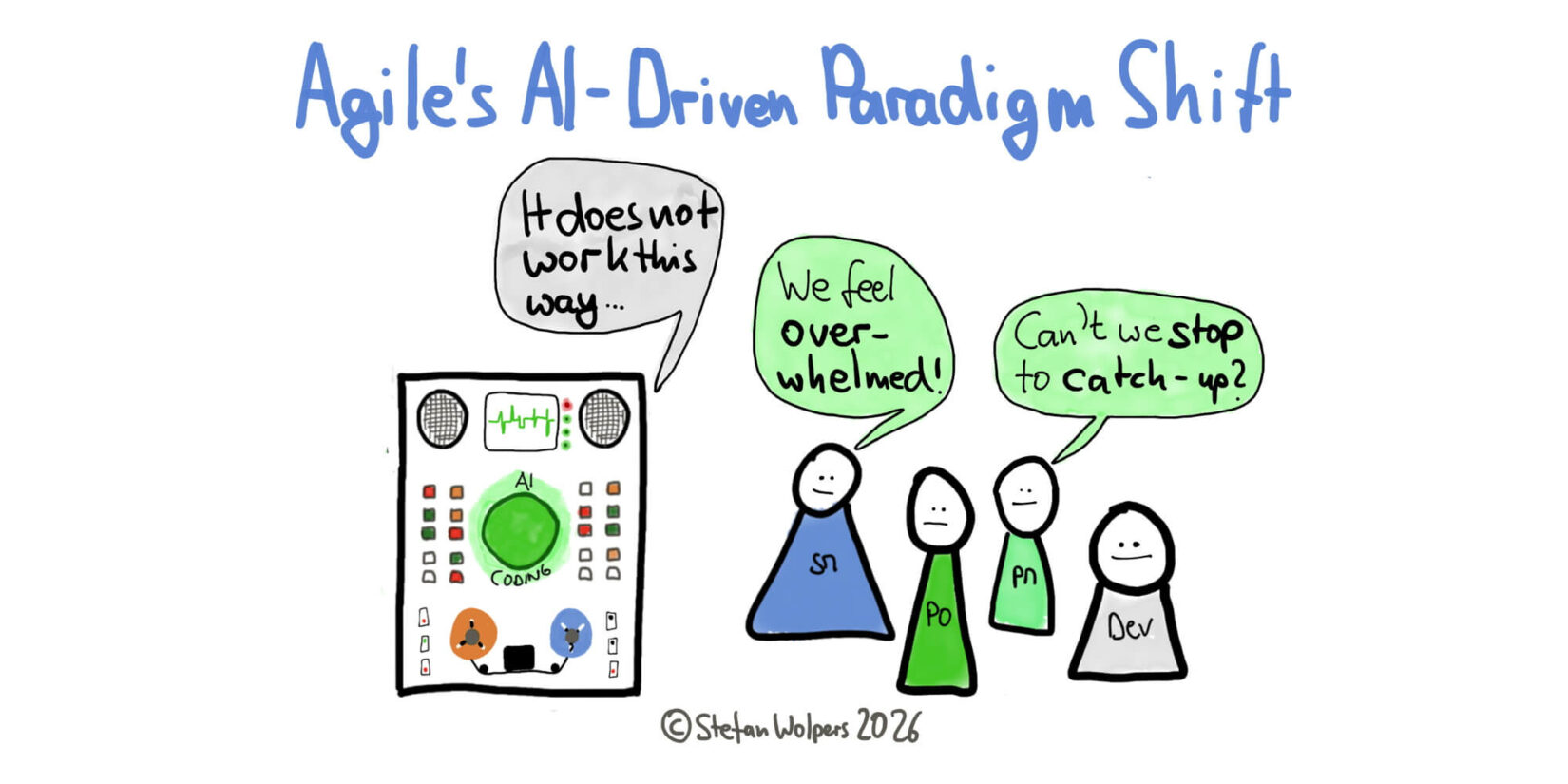
  • Agile’s AI-Driven Paradigm Shift

    TL; DR: Agile’s AI-Driven Paradigm Shift

    The paradigm shift is here. Andrej Karpathy, former Tesla AI director and OpenAI co-founder, recently admitted he has never felt this far behind as a programmer. If Karpathy feels overwhelmed, how should the rest of us feel?

    This article maps the shift across three levels: strategic, product, and individual. Each level demands different responses, while “good enough Agile” no longer provides an income or perspective. The question is where you are on the journey.

    Agile’s AI-Driven Paradigm Shift: “Good enough Agile” no longer provides an income or perspective — Age-of-Product.com

    (more…)