Tag: Development Team

  • Scrum Developer Anti-Patterns

    Scrum Developer Anti-Patterns

    TL; DR: Scrum Developer Anti-Patterns

    After covering the anti-patterns of the Scrum Master, the Product Owner, and the stakeholders, this article addresses Scrum Developer anti-patterns, covering all Scrum Events and the Product Backlog artifact. Continue reading and learn more about what to look out for if you want to support your teammates who build the Increment.

    Scrum Developer Anti-Patterns — Scrum Anti-Patterns Guide 2022 — Berlin Product People GmbH

    (more…)

  • Three Common Developer Blunders in 5:05 Minutes—Making Your Scrum Work #14

    TL; DR: Common Developer Blunders — When Your Scrum Team Lacks Alignment

    There are plenty of failure possibilities with Scrum. Given that Scrum is a framework with a reasonable yet short “manual,” this effect should not surprise anyone. While it is common to first look outside our team for impediments, such as dysfunctional processes or other systemic issues, I would advise starting with the Scrum team’s way of collaboration: Are we aligned on the why, what, and how? Otherwise, the three following Developer blunders may diminish the team effectiveness.

    ???? Join me and explore the consequences of these Scrum Developer blunders and what you can do about them in a little more than five minutes.

    Three Common Developer Blunders in 5:05 Minutes—Making Your Scrum Work #14 — Berlin Product People GmbH

    Update: I am running a poll on LinkedIn—join the voting: “What common ways have you observed how Developers diminish the value creation of their own work?”

    (more…)

  • The ‘Developers Code’ Fallacy — Making Your Scrum Work #9

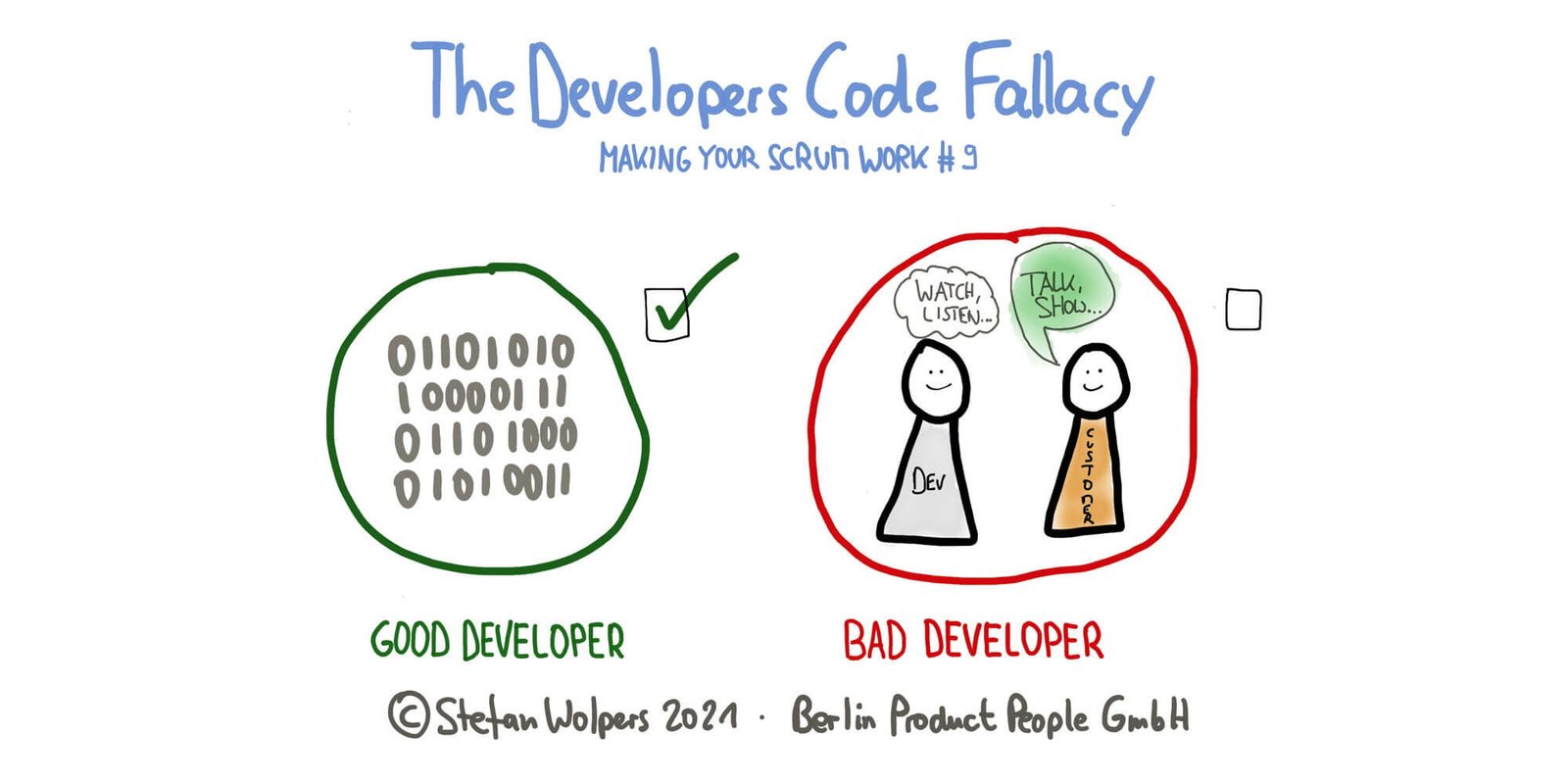
    TL; DR: The Developers Code Fallacy — They Should Talk to Customers, Too, Though

    There are plenty of failure possibilities with Scrum. Given that Scrum is a framework with a reasonable yet short “manual,” this effect should not surprise anyone. The Developers Code Fallacy starts with the idea that Developers are rare and expensive and should focus on creating code. Business analysts or customer care agents can talk to customers instead. However, in practice, it has a diminishing effect on a Scrum team’s productivity and creativity. It is a sign for an organization still profoundly stuck in industrial paradigm thinking.

    Join me and explore the reasons and the consequences of this Scrum anti-pattern in 110 seconds.

    The Developers Code Fallacy — Making Your Scrum Work #9 — Berlin Product People GmbH

    (more…)

  • 20 Questions New Scrum Masters Should Ask Their Teams to Get up to Speed

    TL; DR: 20 Questions a New Scrum Master Should Ask

    Twenty questions for you — the new Scrum Master — that fit into a 60 minutes time-box. Start learning how your new Scrum Team is currently delivering the product and get up to speed: from Product Backlog forensics to metrics to team challenges and technical debt. Download a printable template for your convenience.

    Do you need to talk to your Product Owner? Here you go: 20 Questions from New Scrum Master to Product Owner.

    20 Questions New Scrum Masters Should Ask Their Teams to Get up to Speed — Berlin Product People GmbH

    (more…)

  • Scrum’s Nature: It Is a Tool; It Is Not About Love or Hate

    Scrum’s Nature: It Is a Tool; It Is Not About Love or Hate

    TL; DR: Scrum’s Nature: It Is a Tool; It Is Not About Love or Hate

    Regularly, we find articles from developers detailing why ‘Agile’ in general and Scrum’s nature, in particular, deserve our collective disdain.

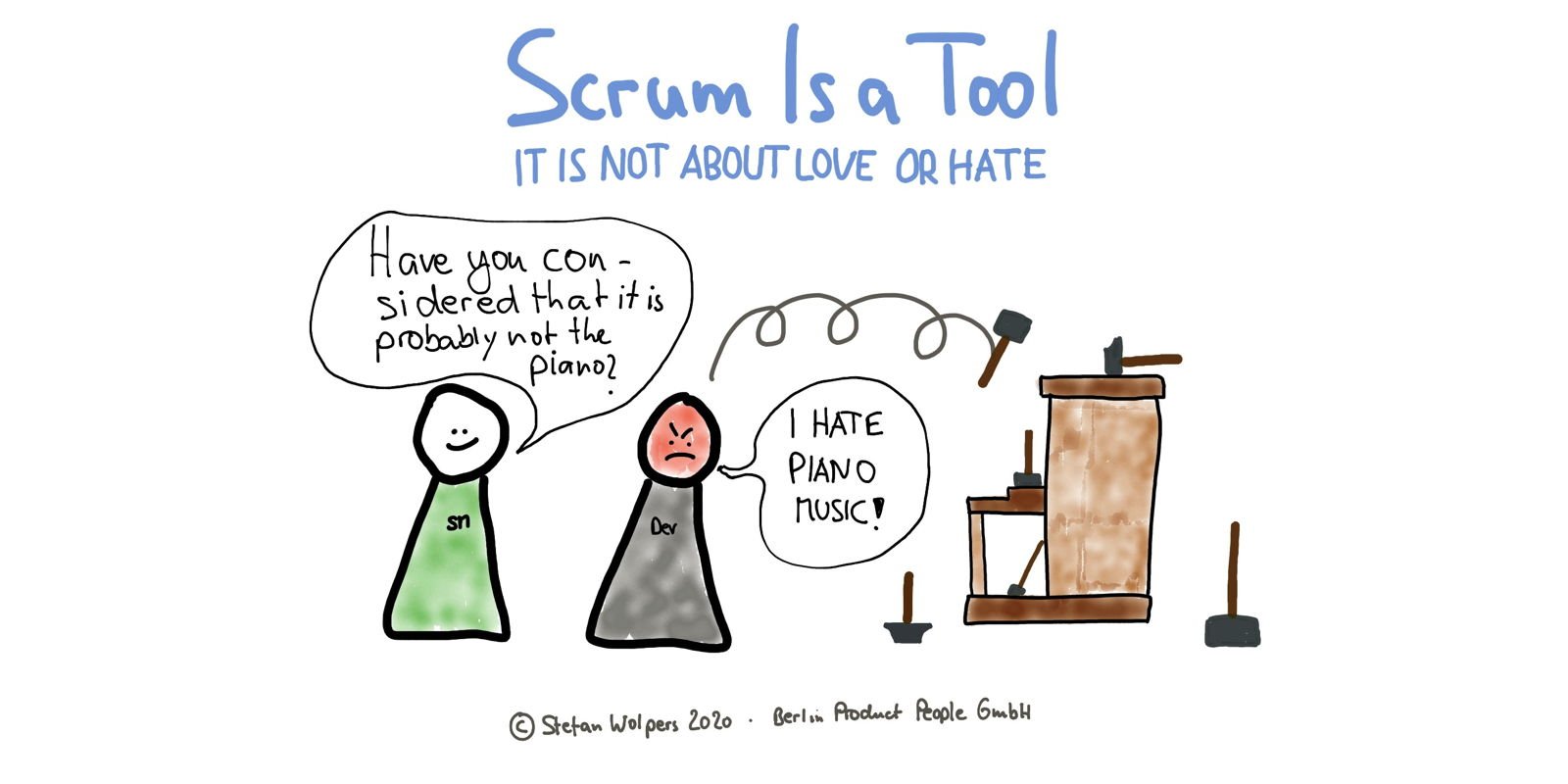
    What has always struck me in this discussion is the fact that Scrum is a tool useful to accomplish one primary task: delivering value to customers of emergent products in complex environments while mitigating an organization’s exposure to risk at the same time. So, if Scrum is not working in an organization, maybe it is because Scrum is applied to the wrong cause in the first place. Or, that its application has been mechanical, driven by folks who don’t know what they are doing. (Seriously, how hard can Scrum be if the manual comprises of 18 pages, right?)

    The question then is: Why would I “hate” a tool unsuited for the intended purpose or applied incompetently? Would I hate a hammer for not being capable of accurately driving a screw into a wooden beam? Probably not, as the hammer wasn’t designed for that purpose, and neither sheer will-power nor stamping with your feet will change the fact.
    Scrum’s Nature: It Is a Tool; It Is Not About Love or Hate — Berlin Product People GmbH

    (more…)

  • Scrum Master Engagement Patterns: The Development Team

    TL; DR: Scrum Master Engagement Patterns

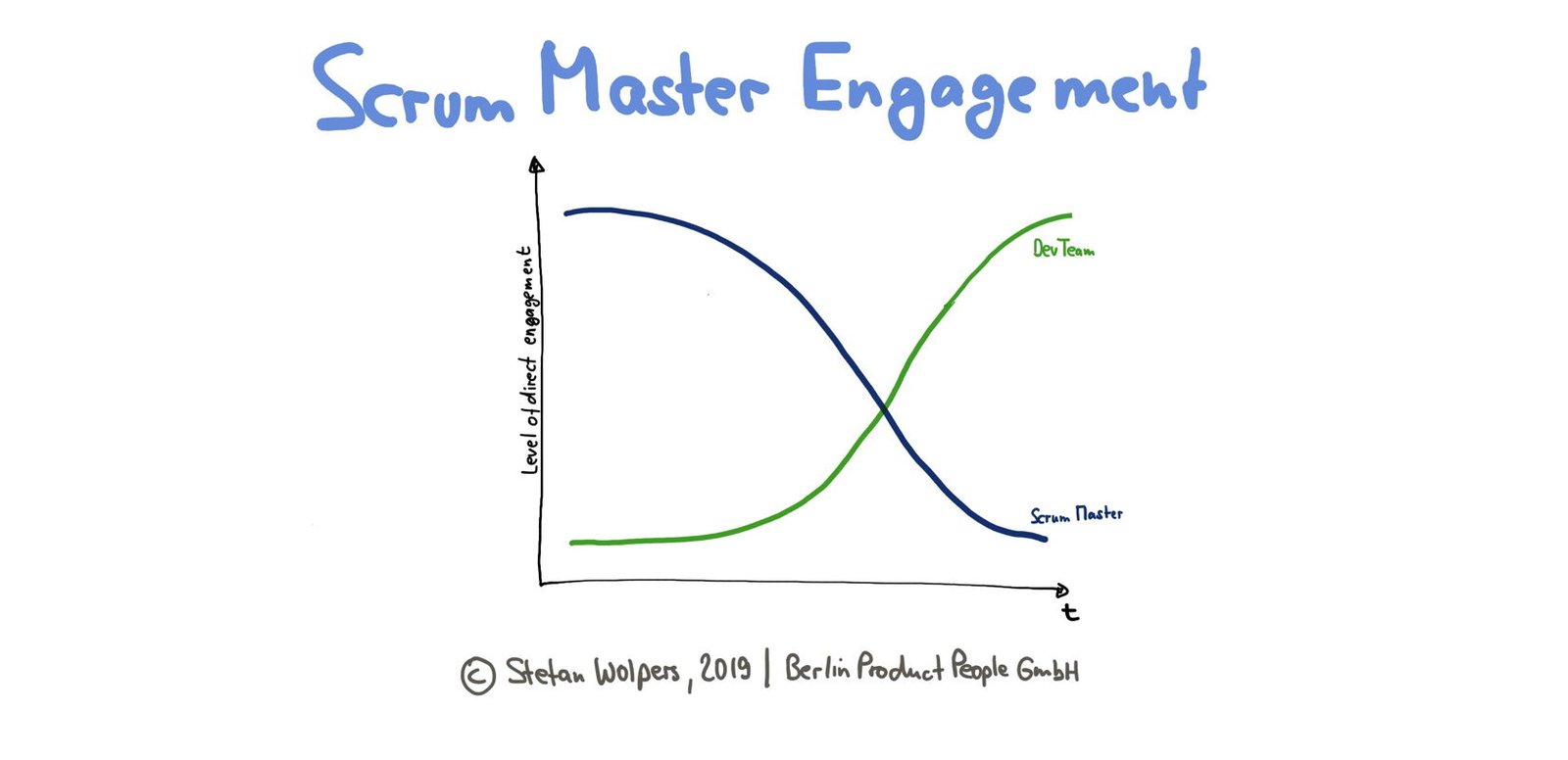
    Last year, I ran a (non-representative) survey on how Scrum Masters are allocating their time when working with a single Scrum Team. Much to the surprise of many readers, the direct Scrum Master engagement with a single Scrum Team of average size and a typical 2-week Sprint turned out to be about 12 hours per week.

    This result immediately prompted two additional questions: What are Scrum Masters doing during the rest of the week, and in what way does a Scrum Master’s work manifest itself over time? While answering the above question requires additional research and data collection, the latter can be answered to a certain grade by focusing on a few common scenarios.

    The first article of this series will address the Scrum Master engagement with the Development Team.

    Scrum Master Engagement Patterns: The Development Team — Berlin Product People GmbH

    (more…)