Tag: Failure

  • The Agile Paradox: Why Tactical Adoption Rarely Leads to True Transformation

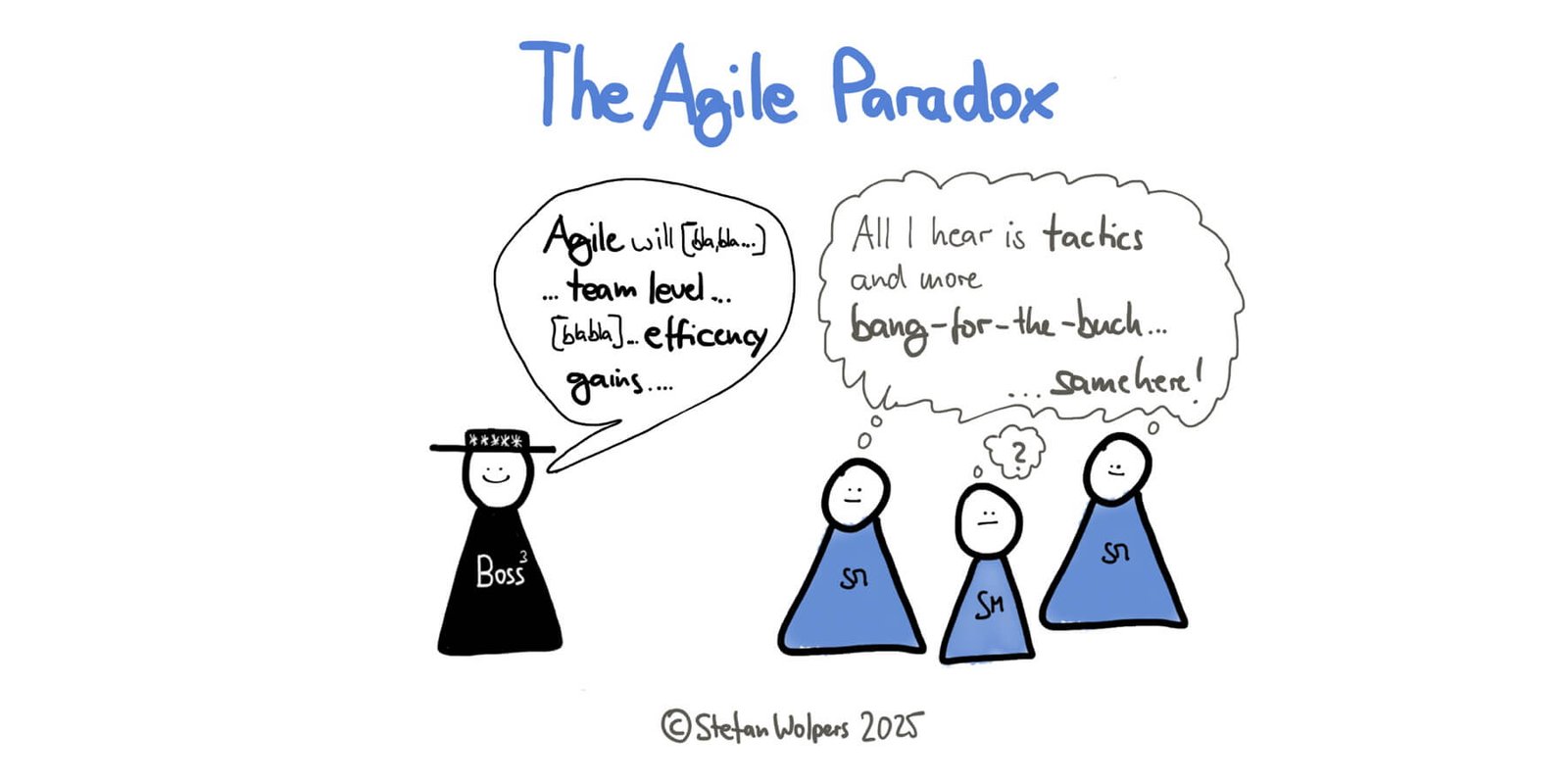
    TL; DR: The Agile Paradox

    Many companies adopt Agile practices like Scrum but fail to achieve true transformation. This “Agile Paradox” occurs because they implement tactical processes without changing their underlying command-and-control structure, culture, and leadership style.

    True agility requires profound systemic changes to organizational design, leadership, and technical practices, not just performing rituals. Without this fundamental shift from “doing” to “being” agile, transformations stall, and the promised benefits remain unrealized.

    The Agile Paradox: Why Tactical Adoption Rarely Leads to True Transformation — the Core of Agile’s Failure — Berlin-Product-People.com

    (more…)

  • The End of “Good Enough Agile”: AI and Product Models Are Your Wake-Up Call

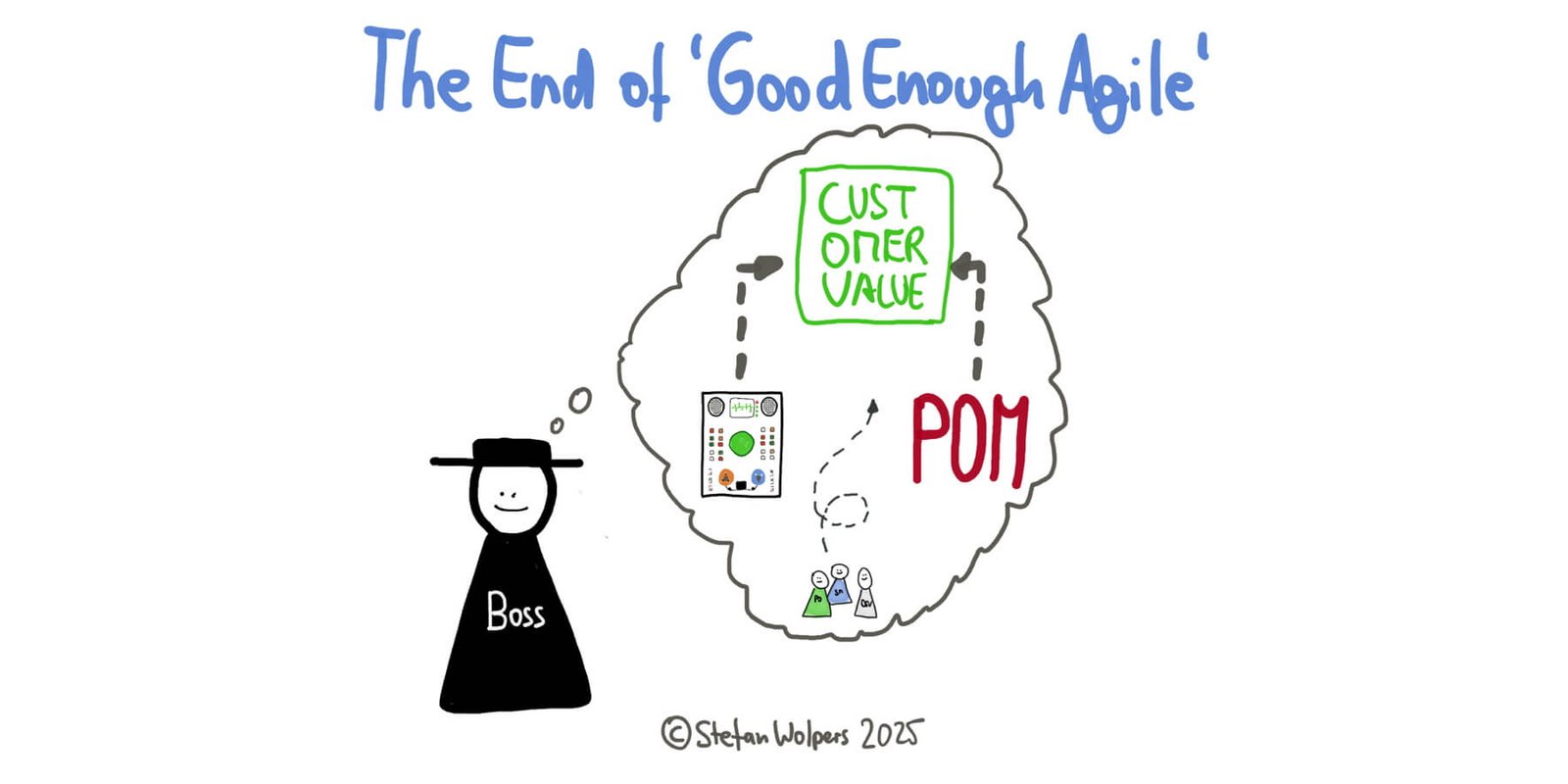
    TL; DR: The End of “Good Enough Agile”

    “Good Enough Agile” is ending as AI automates mere ceremonial tasks and Product Operating Models demand outcome-focused teams. Agile professionals must evolve from process facilitators to strategic product thinkers or risk obsolescence as organizations adopt AI-native approaches that embody Agile values without ritual overhead.

    The End of “Good Enough Agile”: AI and Product Models Are Your Wake-Up Call; it is time to listen and learn — Berlin-Product-People.com

    (more…)

  • Agile’s Quarter-Century Crisis: Why We’re Still Failing 25 Years After the Manifesto

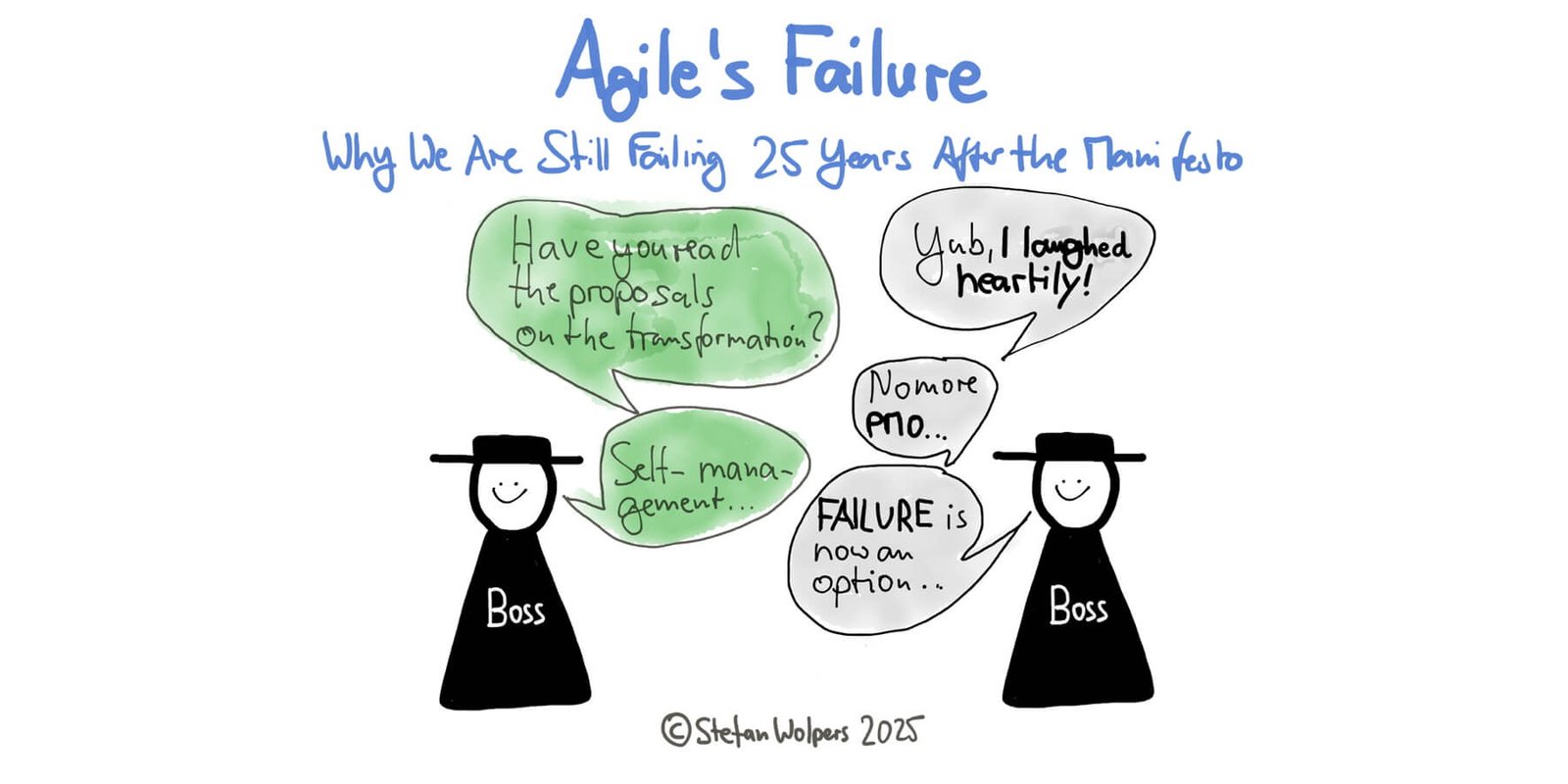
    TL; DR: Agile Failure at Corporate Level

    The data couldn’t be more supportive: Despite 25 years of the Agile Manifesto, countless books, a certification industry, conferences, and armies of consultants, we’re collectively struggling to make Agile work. My recent survey, although not targeting Agile failure, still reveals systemic dysfunctions that persist across organizations attempting to implement Agile practices:

    • Impediment #1: Leadership disconnect (33 % of respondents cite management issues).
    • Impediment #2: Missing product vision (12 % of respondents can’t see the “why”).
    • Impediment #3: Cultural resistance (12 % of respondents report mindset barriers).

    Agile Failure at Corporate Level Is A Quarter-Century Crisis: Why We’re Still Failing 25 Years After the Manifesto — Berlin-Product-People.com

    (more…)

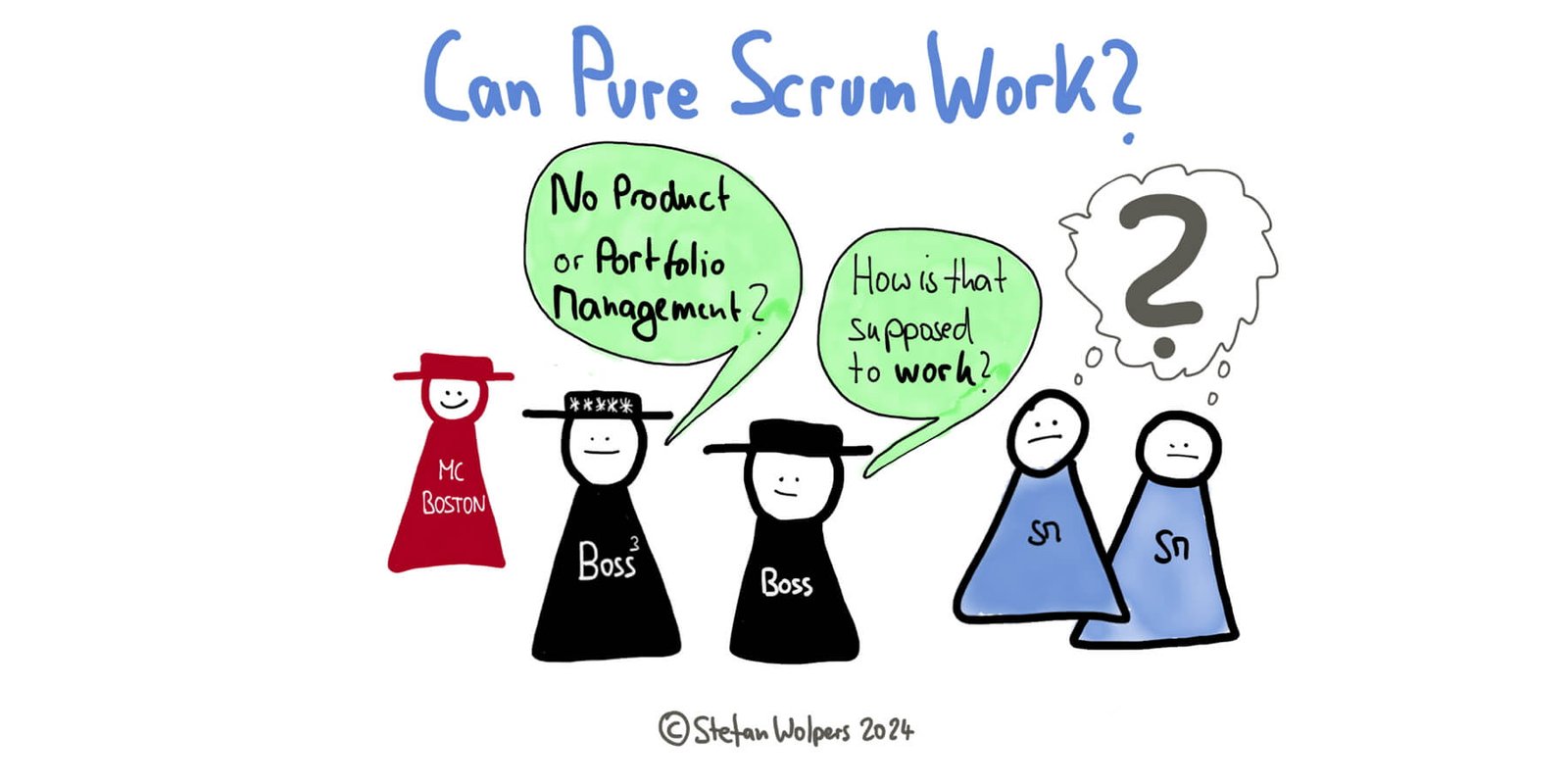
  • Can Pure Scrum Actually Work?

    TL; DR: Pure Scrum?

    Can you rely on pure Scrum to transform your organization and deliver value? Not always. While Scrum excels in simplicity and flexibility, applying it “out of the box” often falls short in corporate contexts due to limitations in product discovery, scaling, and portfolio management.

    This article explores the conditions under which pure Scrum thrives, the organizational DNA required to support it, and practical scenarios where it works best—along with a candid look at where it struggles. Discover whether pure Scrum is a realistic approach for your team and how thoughtful adaptation can unlock its true potential.

    Learn about conditions under which pure Scrum thrives and the organizational DNA required to support it — Berlin-Product-People.com

    (more…)

  • Product Washing: The Pitfalls of a Superficial Product Operating Model Transformation

    TL; DR: Product Washing

    By all means, the “Product Operating Model” (POM) has surged in popularity, especially among traditional organizations keen to prove their adaptability. (And, of course, among the McBostonians who, now that ”Agile” is dead, need a substitute to bill their junior consultants.) Which brings us to the problem of Product Washing.

    On the surface, the product operating model promises a more customer-focused, outcome-driven approach. Empowered teams create value iteratively rather than following rigid, output-focused roadmaps. Best of all, they do so autonomously, well-aligned with the organization’s overall strategy and the possibly myriad other teams working on different initiatives. Think of SAFe done right.

    Yet, for all its promise, the product operating model risks becoming another buzzword rather than an actual driver of transformation. Organizations that tout a “product-led” philosophy often do so without making the profound changes needed to live by it. This hollow adoption of product practices, or what we might call “Product Washing,” leaves companies stuck in the same old dynamics but with a new vocabulary: transformation by reprinting business cards. (Does this sound familiar?)
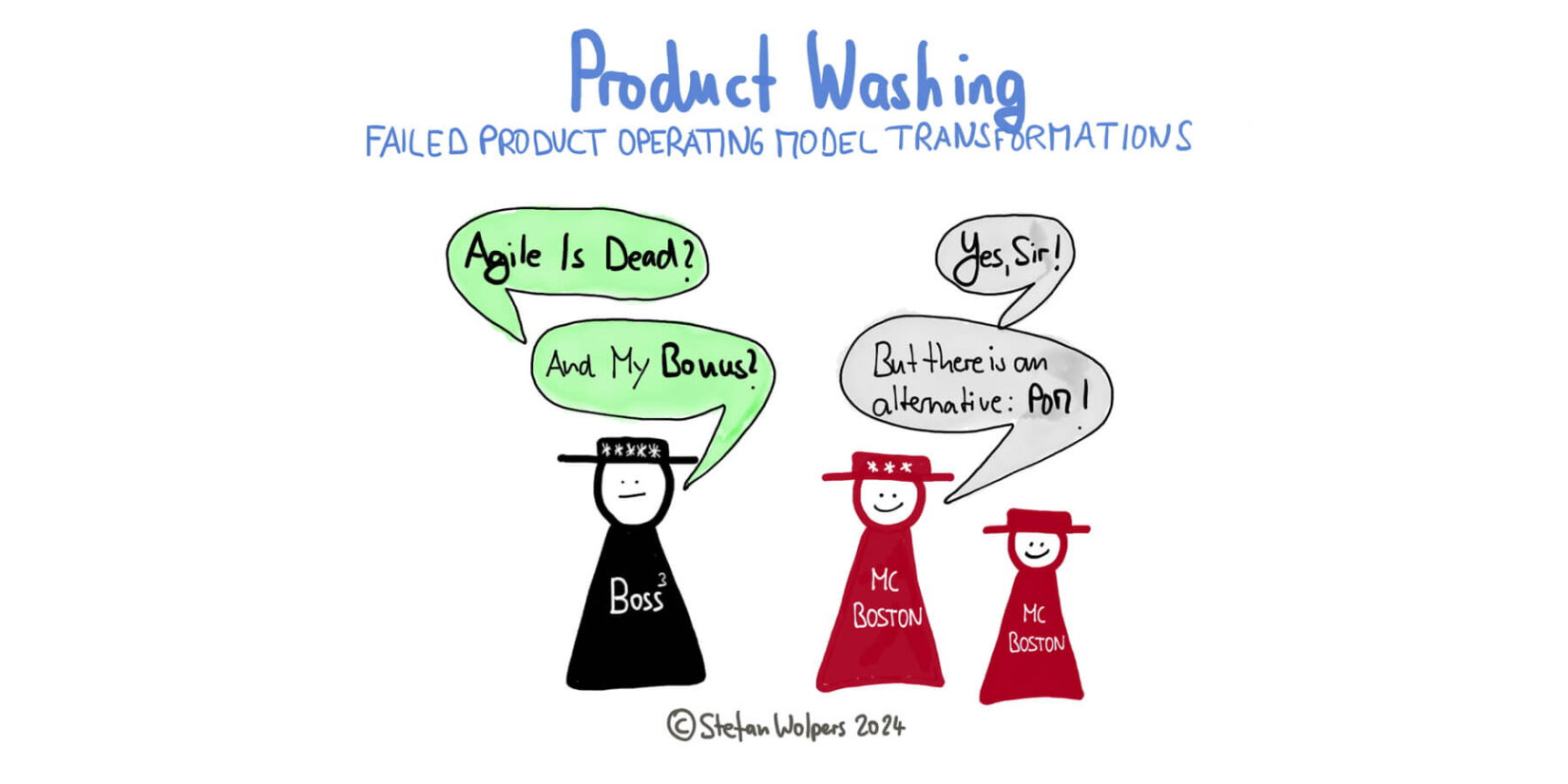
    Product Washing: The Pitfalls of a Superficial Product Operating Model Transformation — Berlin-Product-People.com

    (more…)

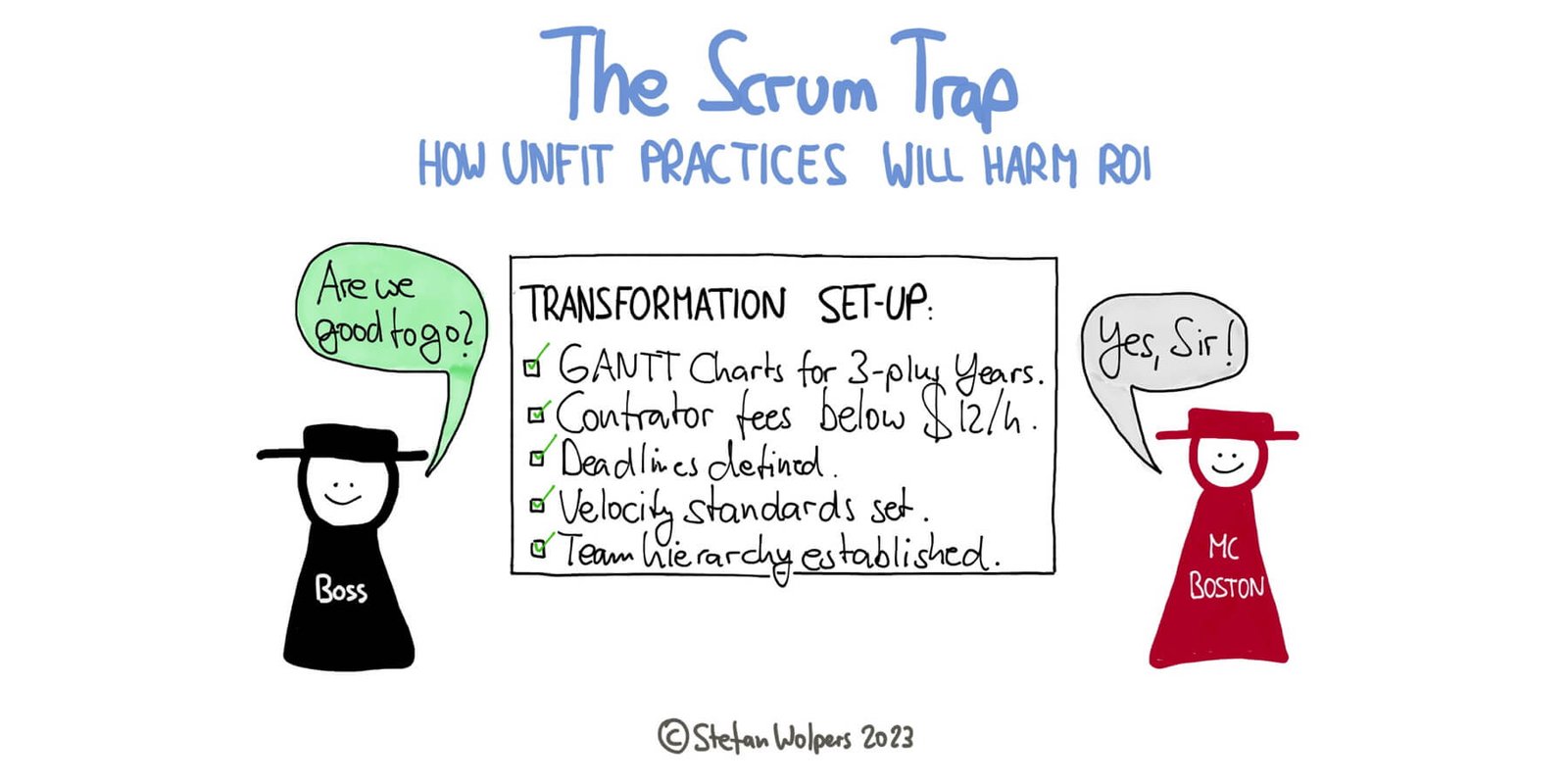
  • The Scrum Trap: How Unfit Practices Will Harm Return on Investment

    TL, DR: The Scrum Trap

    Scrum is a purposefully incomplete framework. Consequently, it needs to be augmented with tools and practices to apply its theoretical foundation to an organization’s business reality: what problems shall be solved for whom in which market? Moreover, there is an organization’s culture to take into account. However, the intentional “gap” is not a free-for-all to accept whatever comes to mind or is convenient. Some tools and practices have proven highly effective in supporting Scrum’s application and reaping its benefits. And then there are others — the Scrum trap.

    Let’s look at what practices and tools for collaboration and team building are not helpful when used with Scrum.

    The Scrum Trap: How Unfit Practices Will Harm Return on Investment — Berlin-Product-People.com

    (more…)

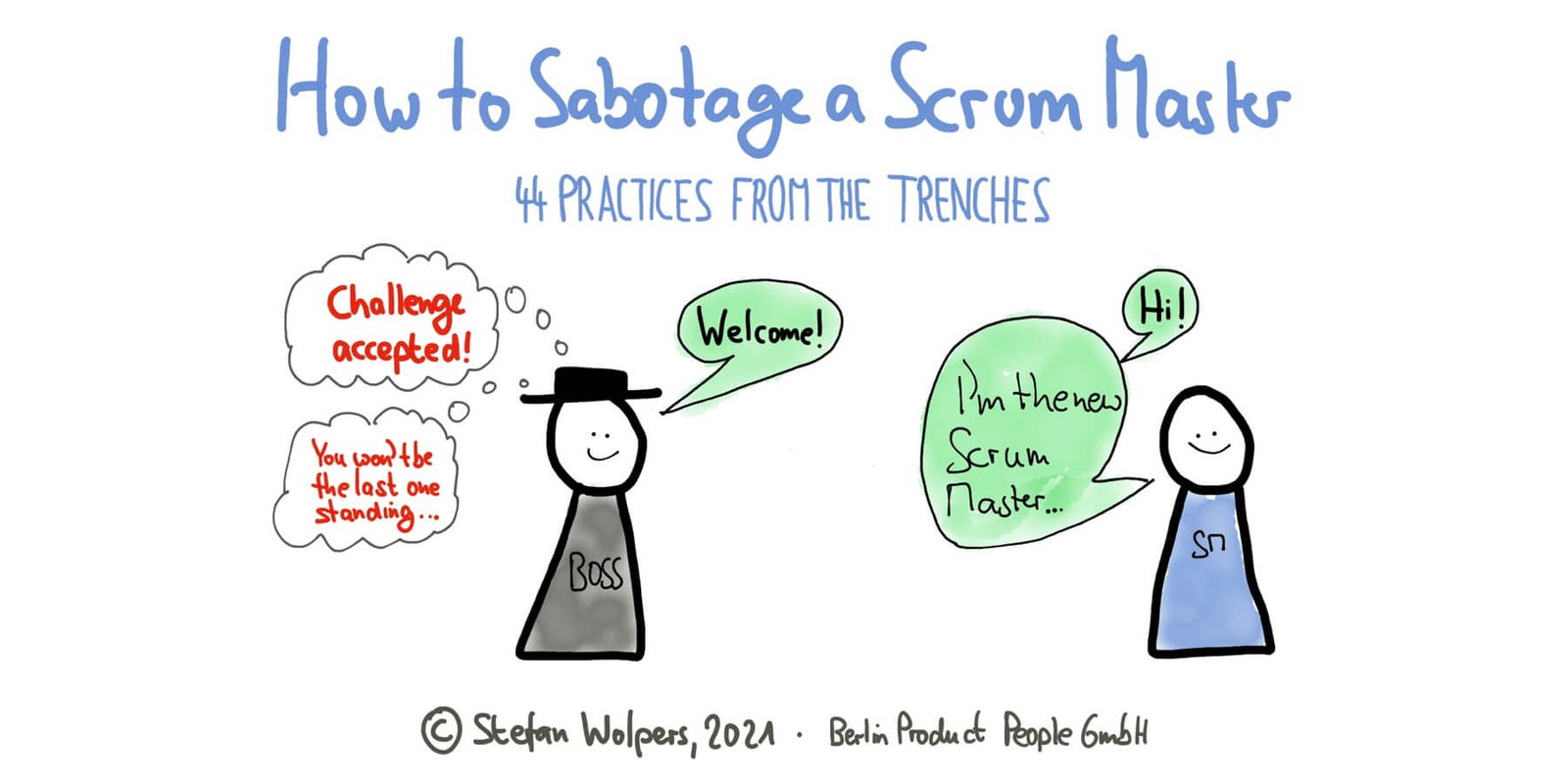
  • How to Sabotage A Scrum Master — 44 Anti-Patterns from the Trenches

    TL; DR: How to Sabotage A Scrum Master — 44 Anti-Patterns from the Trenches to Avoid

    One of my favorite exercises from my Professional Scrum Master classes is how to best sabotage a Scrum Master as a member of the middle management. The exercise rules are simple: You’re not allowed to use any form of illegal activity. So, outsourcing the task to a bunch of outlaws is out of the question. Instead, you are only allowed to use practices that are culturally acceptable within your organization.

    Read on and learn more on how to best sabotage a Scrum Master from the exercise results of more than twenty PSM I and PSM II classes. (I slightly edited the suggestions for better readability.)

    How to Sabotage A Scrum Master — 44 Anti-Patterns from the Trenches — Berlin Product People GmbH

    (more…)

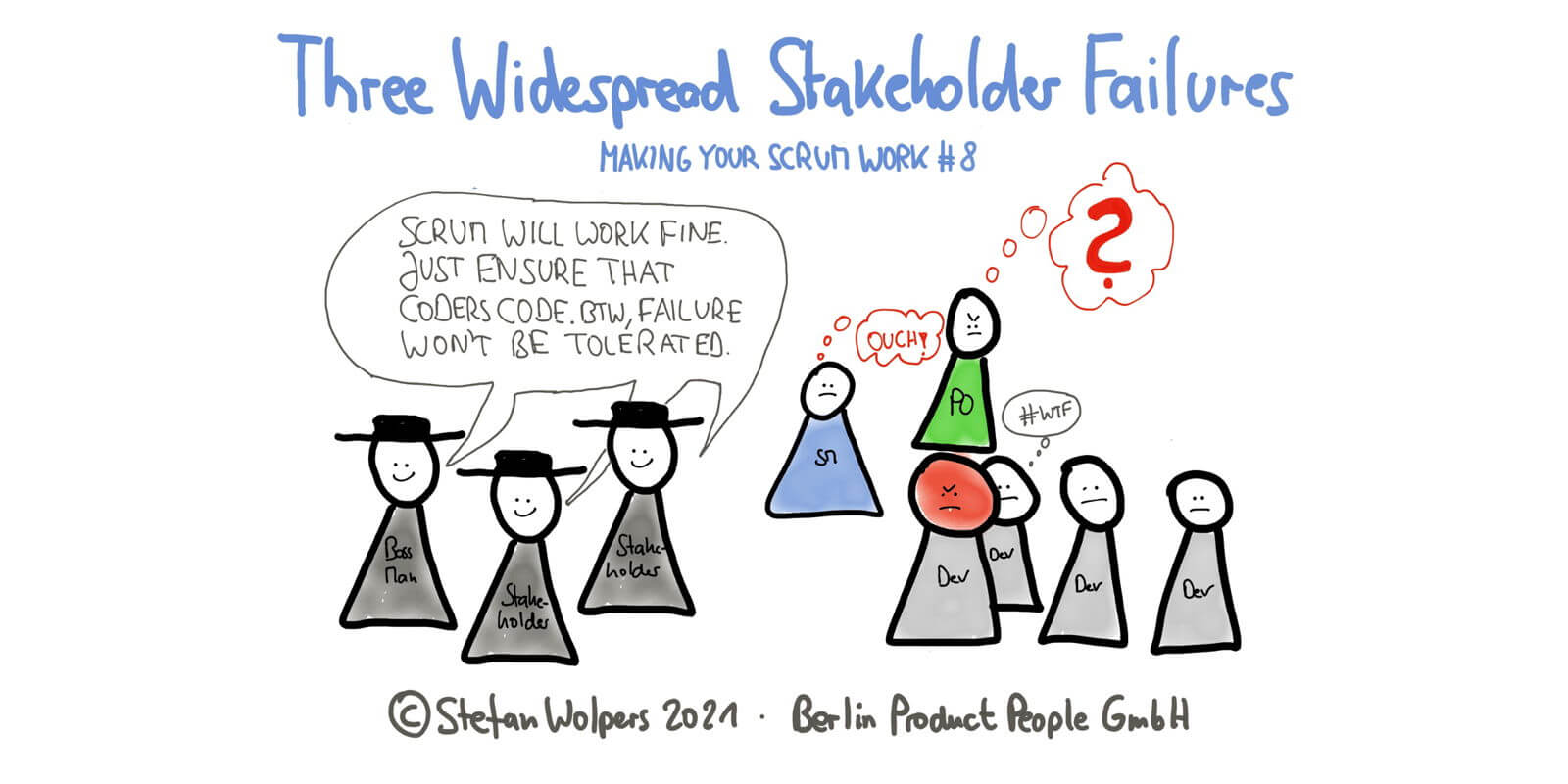
  • Three Wide-Spread Stakeholder Failures in 6:05 Minutes—Making Your Scrum Work #8

    TL; DR: Three Wide-Spread Stakeholder Failures

    There are plenty of Scrum stakeholder failures. Given that Scrum is a framework with a precise and concise yet short “manual,” this effect should not surprise anyone. While the Scrum Guide makes numerous references to stakeholders in Scrum, stakeholders themselves are no official role (accountability), no matter their crucial contribution to a Scrum team’s overall success.

    Explore with me three widespread examples of how stakeholders fail their Scrum teams in three short video clips, totaling 6 minutes and 5 seconds.

    Three Wide-Spread Stakeholder Failures in 6:05 Minutes—Making Your Scrum Work #8

    (more…)

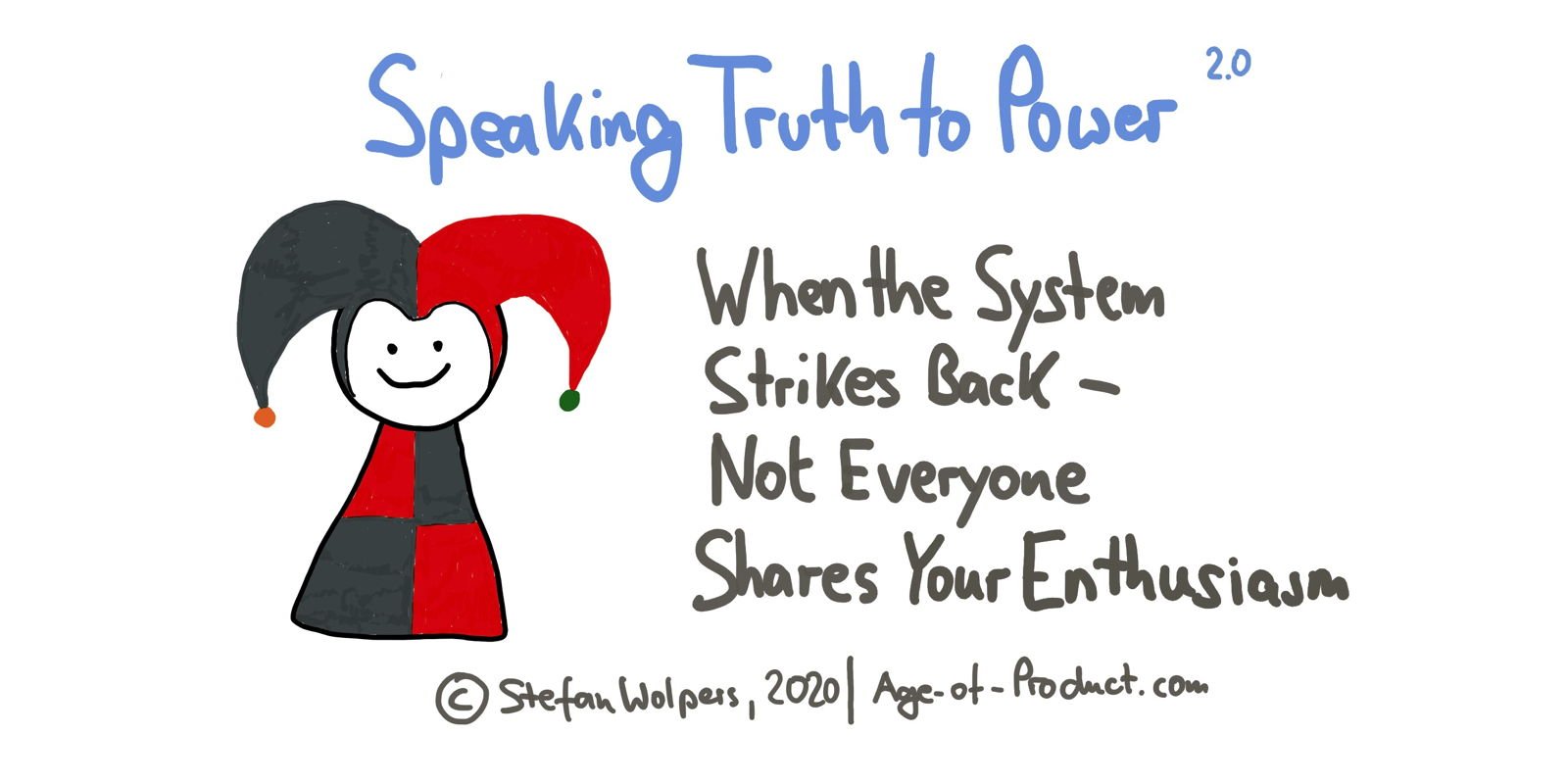
  • Speaking Truth to Power 2.0 — Taking A Stand as an Agile Practitioner

    Speaking Truth to Power 2.0 — Taking A Stand as an Agile Practitioner

    TL; DR: Speaking Truth to Power

    Do you need an emergency fund as a change agent—whether you are acting as Scrum Master, Product Owner, or agile coach—because conflict is inevitable, but change is not? Speaking truth to power probably comes at a price.

    In my experience, speaking truth to power, pointing at the emperor’s new clothes and the reality in the trenches, is necessary a trait for every change agent — including Scrum Masters and agile coaches — in organizations that lack strong leadership.

    Learn more, how this form of professional honesty can backfire when the incumbents, privileged by the existing system, strike back.

    Speaking Truth to Power — Taking A Stand as an Agile Practitioner When the System Strikes Back — Berlin Product People GmbH

    (more…)

  • Agile Movers & Shakers (4): Dave West, CEO of Scrum.org

    Agile Movers & Shakers (4): Dave West, CEO of Scrum.org

    TL; DR: The Agile Movers & Shakers Interview with Dave West of Scrum.org

    Welcome to the Agile Movers & Shakers interview series. Today’s guest is Dave West.

    Dave West is the Product Owner and CEO at Scrum.org. He is a frequent keynote speaker and is a widely published author of articles, along with his acclaimed book: Head First Object-Oriented Analysis and Design. He led the development of the Rational Unified Process (RUP) and then worked with Ivar Jacobson running the North American business for IJI. Then Dave managed the software delivery practice at Forrester research where he was VP and research director. Prior to joining Scrum.org, Dave West was Chief Product Officer at Tasktop where he was responsible for product management, engineering, and architecture.

    Agile Movers & Shakers (4): Dave West, CEO of Scrum.org — Berlin Product People GmbH

    (more…)