TL;DR: Scrum Master Problem Solving — The Survey Results
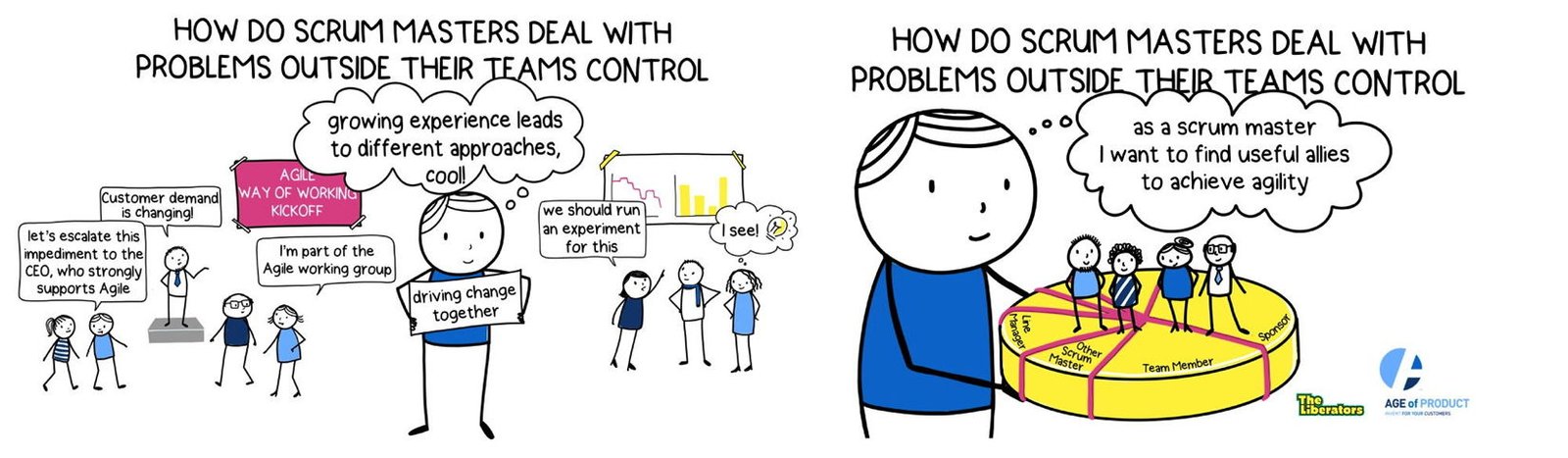
Scrum Master Problem Solving: We all know it; changing the way we work is extremely difficult. It requires us to find novel solutions to wicked challenges, to deal with cultural baggage (‘the way we do things here’) and to bring along the people needed to make a change successful. And yet, this difficult challenge is a core responsibility of Scrum Masters: How can your organization work effectively with Scrum if it is not considering the entire system?
But how do Scrum Masters and Agile Coaches go about this? What strategies do they use to change the system? Who are their most important allies? And what else can we learn from them?
We teamed up with The Liberators to identify what works in the field. We gathered both quantitative as well as qualitative data from a survey completed by over 200 participants.
In Kürze: Scrum Master Problemlösungen — Die Umfrageergebnisse
Scrum Master Problemlösungen: Wir alle wissen es; die Art und Weise, wie wir arbeiten, zu ändern, ist äußerst schwierig. Es erfordert, dass wir neue Lösungen für schwierige Herausforderungen finden und uns mit dem Ballast der Unternehmenskultur (“das haben wir schon immer so gemacht”) herumschlagen müssen. Und wir müssen all die Menschen einbinden, die für einen erfolgreichen Wandel notwendig sind. Und doch ist diese schwierige Bewährungsprobe eine Hauptaufgabe der Scrum Masters: Wie kann ein Unternehmen effektiv mit Scrum arbeiten, wenn es nicht das gesamte System berücksichtigt?
Aber wie gehen Scrum Masters und Agile Coaches dabei vor? Mit welchen Strategien verändern sie das System? Wer sind ihre wichtigsten Verbündeten? Und was können wir noch von ihnen lernen?
Wir haben uns mit The Liberators zusammengetan, um herauszufinden, was im Alltag funktioniert. Das Resultat: Wir haben sowohl quantitative als auch qualitative Daten aus einer Umfrage mit über 200 Teilnehmern gesammelt.
TL;DR: Liberating Structures für Scrum: Das Sprint Planning
Das vierte Hands-on Agile Meetup über Liberating Structures für Scrum befasste sich mit dem Sprint Planning, genauer gesagt mit den Gründen, warum Sprint Plannings scheitern — trotz aller Anstrengungen, die im Vorfeld unternommen wurden, von Product Backlog Refinements bis zum Sprint Review.
TL;DR: Liberating Structures for Scrum: The Sprint Planning
The fourth Liberating Structures Scrum meetup addressed the Sprint Planning, more precisely the reasons why Sprint Plannings fail—despite all the efforts put into them in advance, from the Product Backlog refinement to the Sprint Review.
TL;DR: Liberating Structures for Scrum: The Sprint Retrospective
Liberating Structures Sprint Retrospective: A few weeks ago, I started an event series with my Berlin-based Hands-on Agile Meetup group on how to improve Scrum events utilizing Liberating Structures — a set of easy to learn, yet powerful ways to collaborate as a team. The results have been fantastic so far, and I like to share these outcomes with those who cannot participate in person.
In this first post, learn more on how you can use Liberating Structures strings to improve the level of collaboration and engagement at Sprint Retrospectives.
In Kürze: Liberating Structures für Scrum: Die Sprint Retrospektive
Liberating Structures Sprint Retrospektive: Vor einigen Wochen habe ich mit meiner Berliner Hands-on Agile Meetup-Gruppe eine Veranstaltungsreihe über die Verbesserung von Scrum-Events mit Hilfe von Liberating Structures gestartet. Bei Liberating Structures handelt es sich um eine Reihe von einfach zu erlernenden, aber sehr produktiven Übungen zur Stärkung der Teamarbeit. Die Ergebnisse waren bisher fantastisch, und ich möchte diese Ergebnisse mit jenen teilen, die nicht persönlich teilnehmen können.
In diesem ersten Artikel erfahren Sie mehr darüber, wie Sie Liberating Structures zur Verbesserung der Zusammenarbeit und des Engagements bei Sprint Retrospektiven verwenden können.
The Agile Camp Berlin 2019 will happen from April 26 to April 27, 2019 and the Agile Camp Berlin 2019 venue will be the Evangelische Schule Berlin Zentrum right in the middle of Berlin.
Das Datum für das Agile Camp Berlin 2019 steht fest: 26. und 27. April 2019
Das Agile Camp Berlin 2019 findet vom 26. April bis 27. April 2019 statt und wird in der Evangelischen Schule Berlin Zentrum mitten in Berlin stattfinden.
The Agile Fluency ™ Model by James Shore and Diana Larsen
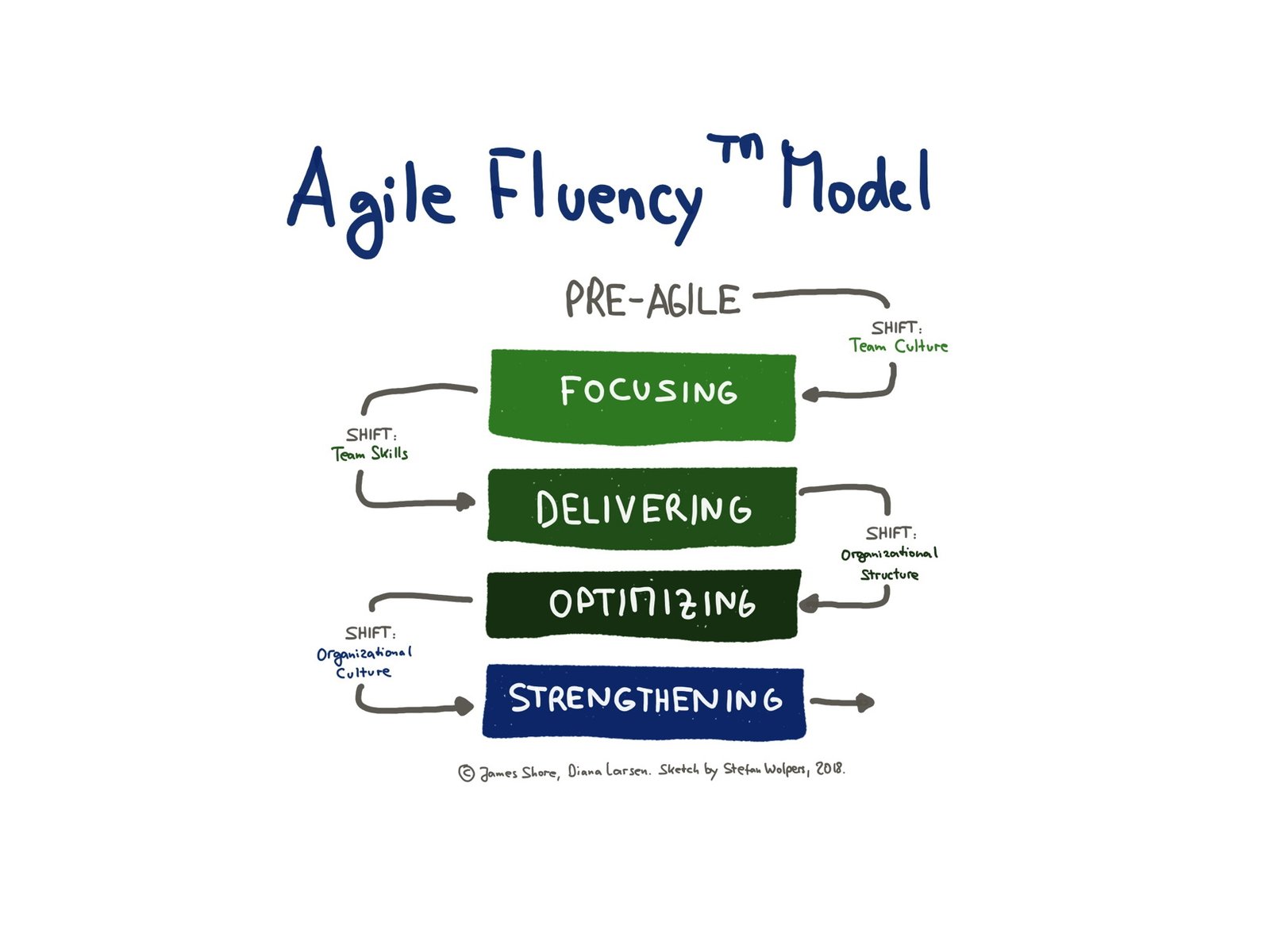
The Agile Fluency ™ model was developed by James Shore and Diana Larsen to guide teams new to agile practice on their path. The model reflects development patterns that teams frequently go through on their agile journey. However, the Agile Fluency ™ model is not a maturity model.
Instead, the steps of the model that may look from the outside like maturity levels are literacy or “fluency” zones. (The metaphor of learning a foreign language applies well here.) Each fluency zone constitutes a valid level of a team’s agility. Also, a combination of elements of more than one zone can describe an organization’s level of agile fluency.
About 60 percent of ‘agile’ organizations seem to fall into zone one (Focusing), about 30 percent belong to zone two (Delivering), while five to ten percent can be assigned to zone three (Optimizing). There is no valid data available on possible candidates for the zone four — Optimizing (for Systems) — as there are only a few companies known to be in that zone. For example, Semco, or Menlo Innovations.
Learn more about the Agile Fluency ™ Model from this video by Diana and James:
The Agile Fluency™ Model Zones
We can characterize the four fluency zones as follows:
Agile Fluency™ Model Zone 1: Focusing
Zone 1 of the Agile Fluency™ model is centered around a shift in the team’s culture. The team is now focusing on working on the most valuable things at all time although the road to value-based prioritization will likely be a bumpy one. Nevertheless, from a business perspective progress is already visible. What we observe in this zone, for example, is the application of basic Scrum principles or a switch to Kanban.
These fundamentals will usually take two to six months to master, and approximately 60 percent of all agile teams across organizations fall into zone 1 of the Agile Fluency™ model. (Note that falling in zone 1 does exclude borrowing already some techniques from zone 2.)
Agile Fluency™ Model Zone 2: Delivering
Zone 2 of the Agile Fluency™ model addresses team skills, mainly being able to release at will, shipping product on a market cadence, capturing value frequently, and revealing obstructions early. All of this requires investments both in software craftsmanship — from extreme programming to clean code to DevOps — as well as creating cross-functional teams.
These steps will typically take from five to eighteen months to master, and approximately 30 percent of agile teams fall into zone 2 of the Agile Fluency™ model.
Agile Fluency™ Model Zone 3: Optimizing
Zone 3 of the Agile Fluency™ model reflects the shift to improve the organizational value of a team by incorporating business expertise. In zone 3 we talk about applying techniques like Lean Startup or Design Thinking to make innovative product decisions. The team will reduce handoffs, improve the flow of work, and address organizational obstacles that impede the team’s future success.
Depending on the nature of the organization, these fundamentals will take from twelve months to three years to master, and no more than five to ten percent of agile teams fall into zone 3 of the Agile Fluency™ model.
Agile Fluency™ Model Zone 4: Strenghtening
Zone 4 of the Agile Fluency™ model is all about optimizing systems by changing their organizational culture. Probably, this means moving toward sociocracy, to holacracy, or teal organizations. Teams understand business priorities and seek to collaborate with other teams to improve the overall value stream, thus propelling innovation in a self-organized manner.
The Agile Fluency ™ Model in Practice
There are two immediate applications of the Agile Fluency ™ Model that can support organizations on their voyage to becoming agile organizations:
The Agile Fluency ™ Diagnostic
The Agile Fluency ™ Diagnostic is a team-based workshop during which a team assesses its situation: from the levels of competence in agile practices to technical excellence to organizational debt and the resulting potential for improvements.
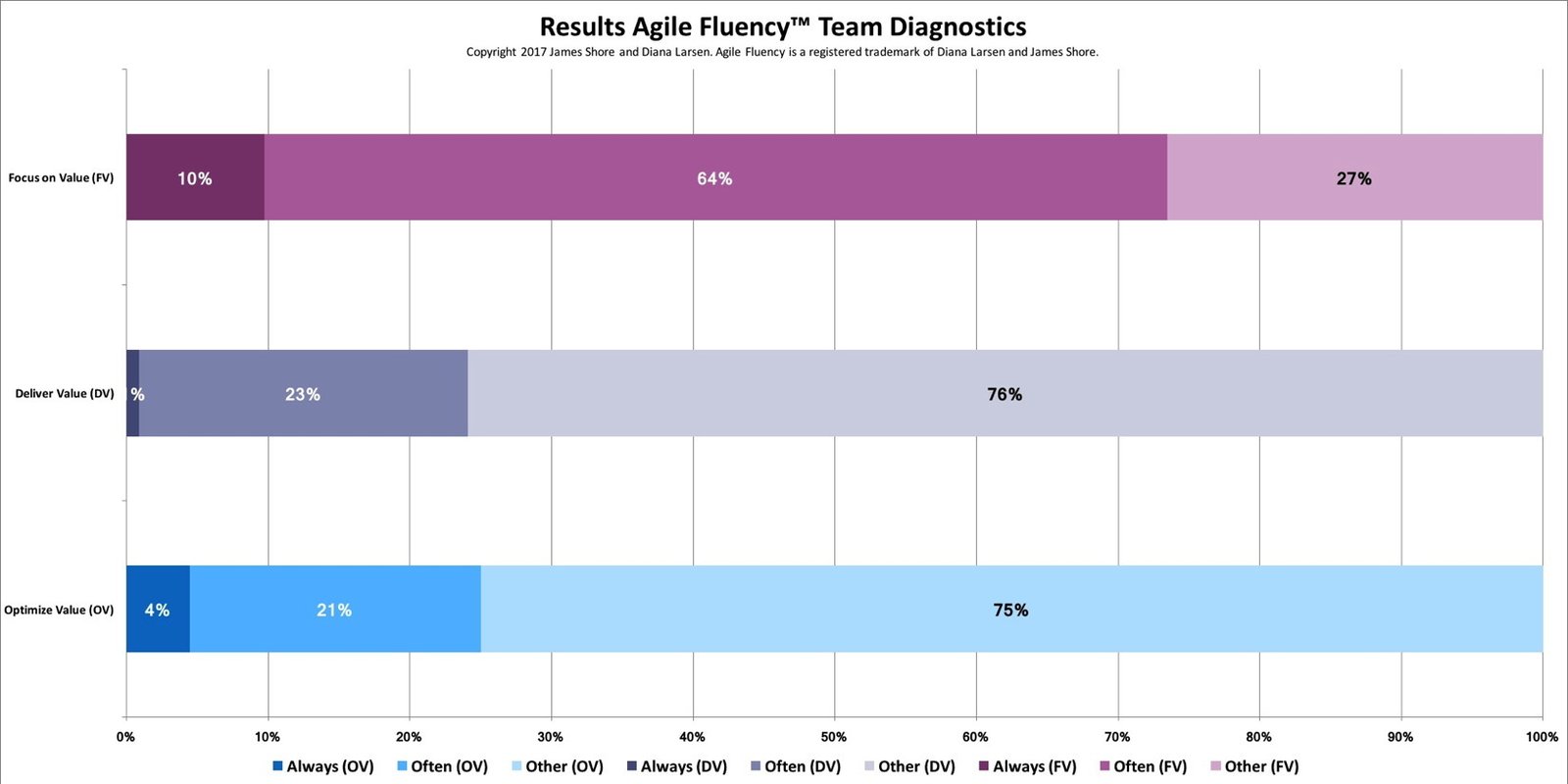
The diagnostic tool centers around a questionnaire comprising of seven questions each for the first three zones (from Focusing to Optimizing) that are answered by each team member. The answers range from ‘1/Never’ to ‘5/Always.’ Based on the distribution of individual answers, the Agile Fluency Diagnostic ™ provides a visualization of a team’s current status:
Once you run this practice with all teams regularly and you aggregate the team results you will create a data set over time that reflects the progress of your organization’s agile transition. Based on this analysis, we not only provide you with a detailed status report of your teams’ (and organization’s) strengths and weaknesses based on the Agile Fluency ™ model. We also identify specific areas of investment in agile practices, which will improve your organization’s return on previous, as well as suitable, future investments.
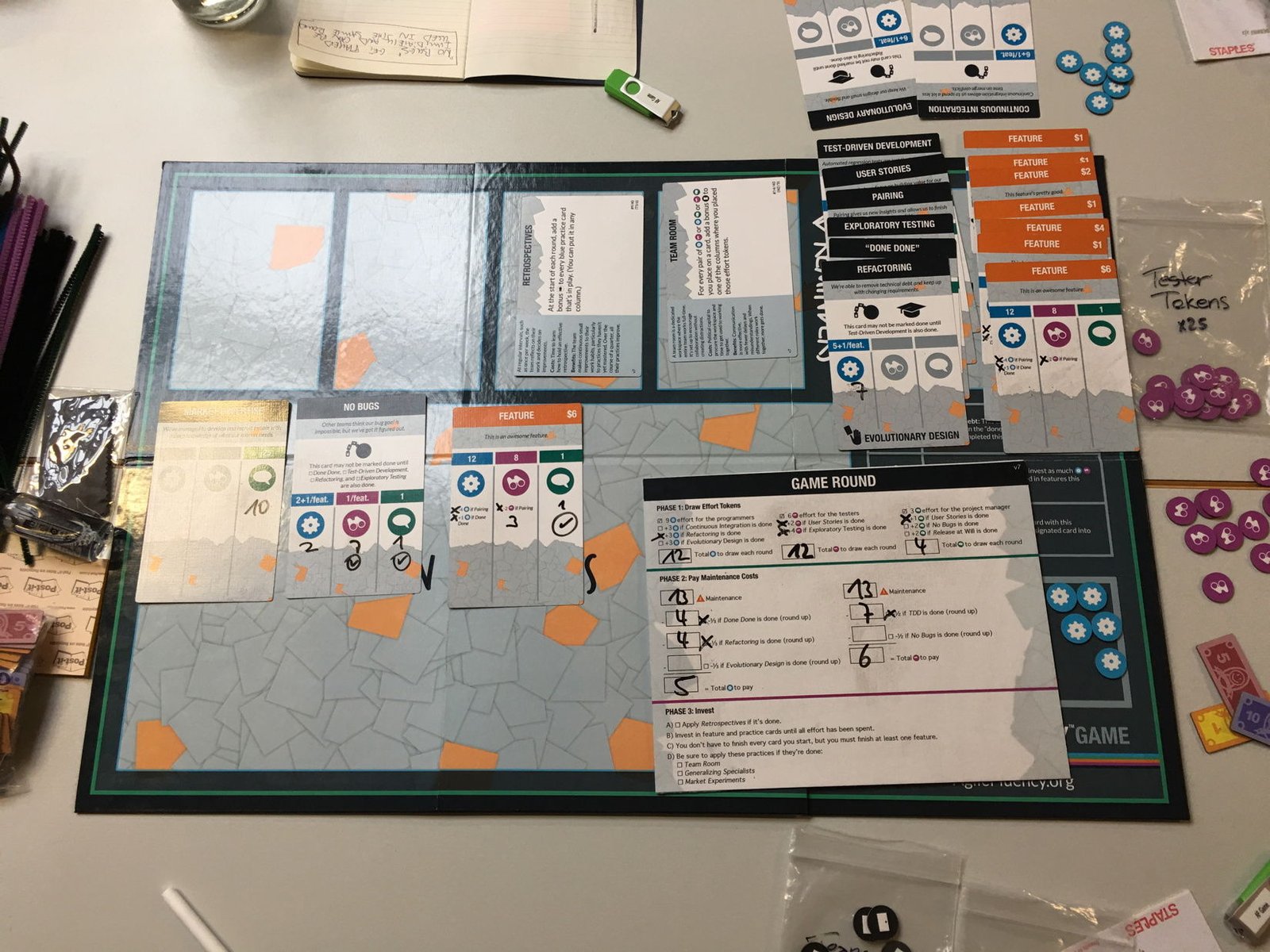
The Agile Fluency ™ Game is a real-life simulation of how a team adopts agile practices—or fails at doing so—in the form of a European-style board game. The game was modeled after the beforementioned fluency patterns of successful agile teams.
The game is an ideal training exercise for new members of agile software development teams who haven’t yet worked with agile practices: developers, product managers, project managers, business analysts or designers.
The game is also very well suited for managers and executives who want to gain insight into themes like business agility, agile transformations or innovative product development practices in general. The Agile Fluency Game ™ does not require specific software development knowledge as a prerequisite for a successful participation.
There is no checklist-based methodology available that guarantees success if only sufficient resources are allocated to becoming agile. Becoming agile is indeed a journey and each organization’s path is unique, depending on its size, the industry, its history, its organization patterns—to name a few factors in this complex equation.
The goal of becoming agile is not some organizational Nirwana. Not every organization is supposed to morph into a Semco-like entity. It is a valid goal for any organization to become fluent in ‘agile’ in zone two. The Agile Fluency ™ Model can support your organization’s journey compellingly.
✋ Do Not Miss Out: Join the 3,800-plus Strong ‘Hands-on Agile’ Slack Community
I invite you to join the “Hands-on Agile” Slack team and enjoy the benefits of a fast-growing, vibrant community of agile practitioners from around the world.
You can book your seat for the training directly by following the corresponding links to the ticket shop. If the procurement process of your organization requires a different purchasing process, please contact Berlin Product People GmbH directly.
Das Agile Fluency ™ Modell von James Shore und Diana Larsen
Das Agile Fluency ™ Modell wurde von James Shore und Diana Larsen entwickelt, um Teams, die in agilen Praktiken unerfahrenen sind, einen Leitfaden für die künftige Teamentwicklung an die Hand zu geben. Das Modell zeigt dazu Entwicklungsmuster auf, die Teams auf ihrer Reise zur agilen Kompetenz häufig durchlaufen, es ist jedoch ausdrücklich kein Reifemodell.
Stattdessen definiert das Agile Fluency ™ Modell Erfahrungsstufen oder -zonen, die sich an das Modell des Erlernens einer fremden Sprache anlehnen. Jede dieser „fluency zones“ genannten unterschiedlichen Stufen der Geläufigkeit mit agilen Praktiken definieren bereits eine Fähigkeitsstufe eines Teams. Ein Team kann dabei im Alltag Fähigkeiten aus verschiedenen Fähigkeitsstufen auf sich vereinen. Diese lassen wiederum Rückschlüsse auf die Agilität der Organisation zu.
Etwa 60 % aller agilen Organisation fallen in die erste Zone (Focusing), etwa 30 % in die zweite (Delivering) und nicht mehr als fünf bis zehn Prozent fallen in die dritte Zone (Optimizing). Für die vierte Zone—Optimizing (for Systems)—liegen keine zuverlässigen Daten vor, da es nur wenige bekannte Vertreter gibt. Hierzu zählen zum Beispiel Semco oder Menlo Innovations.
Erfahren Sie mehr über das Agile Fluency ™ Model in diesem Video von Diana und James:
h2>Die Zonen des Agile Fluency™ Modells
Die vier Zonen des Agile Fluency™ Modells können wie folgt charakterisiert werden:
Agile Fluency™ Modell Zone 1: Focusing
Im Mittelpunkt der ersten Zone steht ein Kulturwechsel innerhalb des Teams. Das Team fokussiert sich zu jeder Zeit auf die Arbeit den wertvollsten Aufgaben, obwohl sich der Schritt zu einer wertbasierten Priorisierung von Aufgaben vermutlich nicht konfliktfrei umsetzen lässt. Trotzdem ist aus Sicht des Unternehmens ein Fortschritt bereits erkennbar. In dieser ersten Zone können wir zum Beispiel die Anwendung einfacher Scrum- oder Kanban-Praktiken beobachten.
Der Erwerb dieser Grundlagen dauert zwischen zwei und sechs Monaten und etwa 60 % aller agilen Teams fallen in die erste Zone.
Agile Fluency™ Modell Zone 2: Delivering
Zone 2 des Agile Fluency™ Modells erfasst die handwerklichen Teamfähigkeiten, zum Beispiel, ob das Team in der Lage ist, jederzeit neue Version releasen zu können, oder ob Produkterweiterungen regelmäßig und zeitnah auf dem Markt kommen um Werte zu schaffen und Marktchancen nutzen zu können. Diese Teamfähigkeiten erfordern Investitionen sowohl in technische Exzellenz—von Extreme Programming bis zu DevOps—als auch in cross-funktionale Teams.
Der Erwerb dieser Teamfähigkeiten dauert zwischen fünf und 18 Monaten und etwa 30 % aller agilen Teams fallen in diese zweite Zone.
Agile Fluency™ Modell Zone 3: Optimizing
Die Zone 3 des Agile Fluency™ Modells umfasst die Anstrengungen, den Wert eines Teams aus Sicht der Organisation durch den Aufbau von Geschäftskompetenz zu vergrößern. Hierzu zählen zum Beispiel die Anwendung innovative Praktiken wie Lean Startup oder Design Thinking. Das Team vermindert auf diese Art Reibungsverluste, es verbessert Arbeitsprozesse und adressiert Hindernisse in der Organisationsstruktur, welche zukünftige Teamerfolge gefährden könnten.
In Abhängigkeit von der Art der Organisation kann dieser Entwicklungsschritt zwischen 12 Monaten und drei Jahren in Anspruch nehmen. Höchstens fünf bis zehn Prozent aller agilen Teams fallen in diese dritte Zone.
Agile Fluency™ Modell Zone 4: Strenghtening
In Zone 4 des Agile Fluency™ Modells dreht sich alles um die Optimierung einer Organisation durch eine grundlegende Veränderung ihrer Kultur. Diese Veränderung könnte auf eine Anwendung des Sociocracy- oder des Holacracy-Modells oder einer Teal-Organisation hinauslaufen. In einem Organisationsmodell der Zone 4 kooperieren Teams selbstorganisiert miteinander, um Wertströme für die Organisation zu optimieren.
Das Agile Fluency ™ Modell im der Praxis
Es gibt zwei unmittelbare Anwendungen des Agile Fluency ™ Modells, welche die agile Transformation einer Organisation unterstützen können:
Die Agile Fluency ™ Diagnose für Agile Teams
Im Rahmen dieser Workshops bringen wir in Erfahrung, wie Ihre Teams die Situation in Ihrer Organisation selbst einschätzen: von den Fähigkeiten eines jeden Teams, über Fragen der technischen Exzellenz bis zum Verbesserungspotenzial innerhalb der Organisation. Die Agile Fluency Diagnose ™ basiert zunächst auf einem Fragebogen zur Datenerhebung. Der Fragebogen adressiert jede der drei ersten Agile Fluency-Zonen (von Focusing bis Optimizing) und jedens Teammitglied beantwortet alle Fragen für sich. Die Antworten reichen von ‘1/niemals’ to ‘5/immer.’
Basierend auf der Verteilung der individuellen Antworten liefert die Agile Fluency Diagnose ™ eine Visualisierung der agilen Fähigkeiten eines Teams im Rahmen der gegebenen organisatorischen Möglichkeiten:
Auf Basis dieser Auswertung im Rahmen des Agile Fluency Modells ™ identifiziert ein Team dann während einer Diskussion diejenigen Problembereiche, die das Team als Nächstes verbessern möchte, um in der agilen Produktentwicklung besser zu werden.
Die differenzierte Betrachtungsweise der Agile Fluency Diagnose ™ ermöglicht es dabei insbesondere, die Investitionen auf sinnvolle Bereiche zu beschränken und damit unnötige Aufwendungen für die Einführung agiler Praktiken zu vermeiden.
Das Agile Fluency Spiel ™: Ein realitätsnahes Modell agiler Praktiken
Das Agile Fluency Spiel ™ ist ein realitätsnahes Modell der Wirkungsweise agiler Praktiken in der Softwareentwicklung und leitet sich vom Agile Fluency ™ Modell ab, welches von James Shore und Diana Larsen entwickelt wurde.
Die Stärke des Agile Fluency ™ Spiels resultiert aus der Betonung der Teamarbeit: das Team gewinnt, das Team verliert. Unter Team sind im Zusammenhang mit dem Agile Fluency ™ Spiel nicht nur die Entwickler zu verstehen, sondern ein crossfunktionales Team bzw. interdisziplinäres Team. Das Agile Fluency ™ Spiel verdeutlicht, dass das enge Zusammenspiel zwischen Entwicklung, Business und Design in einem agilen Team Grundlage für den Erfolg der Organisation ist. Darüber hinaus verdeutlicht das Spiel auch, wie wichtig es in der agilen Softwareentwicklung ist, technische Schulden regelmäßig und rechtzeitig abzubauen und technische Exzellenz — von Entwicklungsmethoden bis zu DevOps — in Mittelpunkt der agilen Transformation zu stellen.
Das Spiel setzt keine besonderen Kenntnisse in der Softwareentwicklung voraus und ist daher nicht nur für Teammitglieder, sondern auch sehr gut für Führungspersonal aus dem mittleren und oberen Management geeignet, die sich mit Business Agilität und Methoden innovativer Produktentwicklung beschäftigen.
Das Agile Fluency ™ Modell liefert zwei Erkenntnisse:
Es gibt keine Methodologie, die den Erfolg einer agilen Transformation garantiert, wenn nur genügend Ressourcen hierauf verwendet werden. Agil zu werden ist in der Tat eine Reise—und kein Ziel—und jede Organisation muss ihren eigenen Weg finden. Dies wiederum geschieht abhängig von ihrer Größe, ihrer Branche, ihrer Geschichte oder ihrer Organisationsstruktur, um nur einige Einflussfaktoren in dieser komplexen Situation zu nennen.
Das Ziel einer agilen Transformation ist nicht zwangsläufig ein agiles Nirwana und nicht jede Organisation kann in sich eine Semco-artige Struktur verwandeln. Es ist bereits ein anspruchsvolles Ziel, die Zone zwei des Modells zu erreichen. Die gute Nachricht ist, dass das Agile Fluency ™ Modell dabei ausgesprochen hilfreich ist.
✋ Jetzt der kostenlosen ‚Hands-on Agile‘ Slack Community mit über 3.800 agilen Praktikern beitreten
Wir laden Sie ein, der kostenlosen ‚Hands-on Agile‘ Slack Community beizutreten — einer lebenhaften und hilfreichen Gemeinschaft von Agile Coaches, Scrum Mastern und Product Ownern aus aller Welt.
Sie können Ihren Platz für die Schulung direkt buchen, indem Sie den entsprechenden Links zum Ticketshop folgen. Sollte der Beschaffungsprozess Ihrer Organisation einen anderen Einkaufsprozess erfordern, wenden Sie sich bitte direkt an die Berlin Product People GmbH.